

Wood-Mode custom cabinetry brings appliance planning and kitchen design into the same conversation.
You find a refrigerator you love, check the width, and assume it will fit into the kitchen you are planning. Then the details start surfacing. The door needs more room beside the wall. The handles project into the walkway. The cabinetry above it needs to change.
Appliances influence a kitchen long before anyone plugs them in.
When planning a kitchen remodel, select your major appliances during the design process, before cabinetry is finalized and ordered. Their installation requirements need to be coordinated with the layout and construction plans. Purchasing and delivery can happen on a different schedule, but the design team needs to know which products it is designing around.
Should You Choose Appliances or Cabinets First?
Appliance selection and cabinet design should develop together.
Early in the process, you can establish the general direction. Do you want a range or a separate cooktop and wall oven? Will the refrigerator stand on its own or integrate into the cabinetry? Would a second dishwasher genuinely help your household?
Those choices help shape the layout. As the design develops, exact models replace general preferences so the team can check dimensions and installation requirements before the cabinet order is released.
A placeholder labeled “refrigerator” is useful in an early sketch. It does not provide enough information to finalize the cabinets surrounding it.
The same applies to appliances that appear interchangeable. Two products with the same advertised width may have different requirements for their openings, adjacent surfaces, or connections.
A Refrigerator Needs More Than an Opening
A refrigerator can fit into its allotted space and still be frustrating to use.
Consider what happens when the doors open. A nearby wall may restrict their movement. An adjacent cabinet pull may interfere. Interior drawers may need the doors to open farther than you expect.
Depth also deserves attention. A counter-depth refrigerator should be evaluated using its actual dimensions, including doors and handles, rather than assuming every surface will align with the cabinetry.
The design needs to account for both the appliance’s installation requirements and the space people need around it. Think about unloading groceries, accessing the freezer, and passing through the kitchen while someone is putting food away.
These relationships are much easier to resolve before cabinetry is manufactured.
Your Cooking Appliances Shape the Surrounding Design
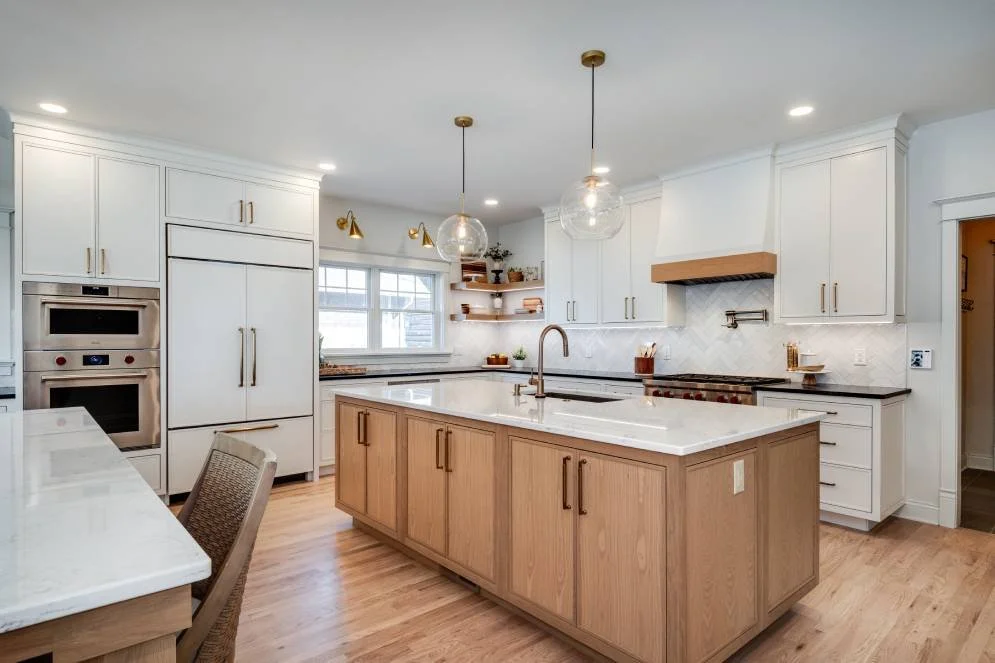
Cooking appliances, ventilation, and surrounding cabinetry should be planned together. Wood-Mode cabinetry. Design: Pamela Nesbitt, Denise Quade Design.
Choosing between a range and a separate cooktop and wall oven changes how the kitchen is organized.
A wall oven occupies cabinet space that might otherwise provide storage. A cooktop affects the countertop opening and the space beneath it. The ventilation approach needs to be considered alongside the cooking appliance and its location.
Changing fuel types also calls for coordination. Replacing a gas cooking appliance with induction, for example, requires the project team to review the electrical supply and the selected product’s installation requirements.
You do not need to arrive at your first design meeting with all of those questions answered. You do need to raise your preferences early enough for the team to assess what they mean for the project.
Panel-Ready Appliances Require Early Coordination
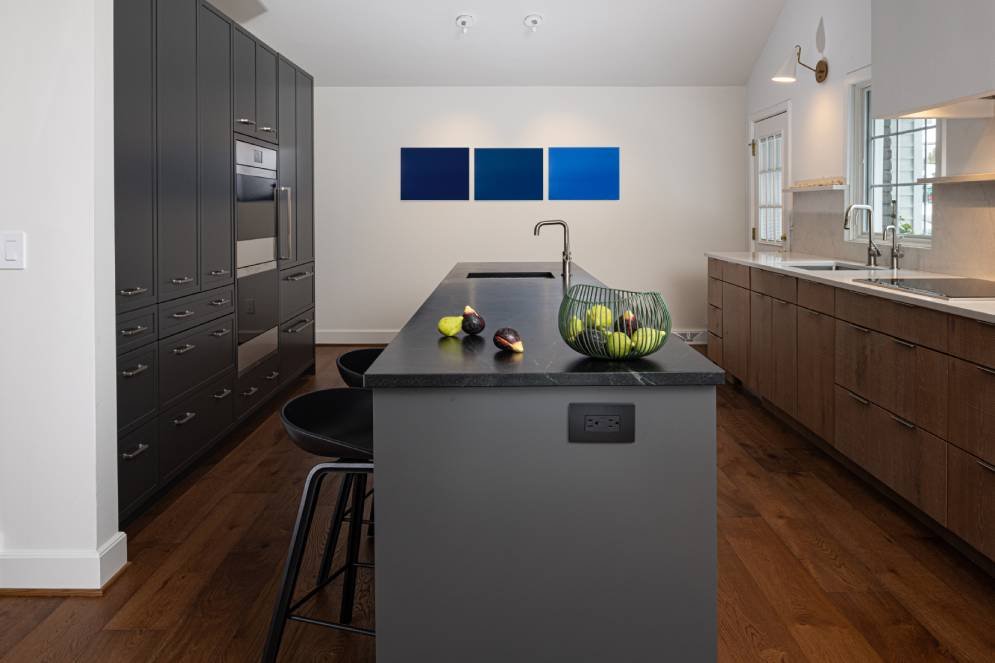
Custom refrigerator panels and coordinated appliance openings create a cohesive cabinetry wall. Wood-Mode cabinetry. Design: Tom Halloran, Modern Kitchens of Buffalo.
Panel-ready appliances accept decorative panels designed to coordinate with the surrounding cabinetry. They can create a quieter visual presence, but that appearance depends on careful planning.
The appliance model determines the applicable panel requirements. Your team also needs to coordinate the panel design and hardware with the adjacent cabinets so the finished arrangement works as intended.
If an integrated refrigerator or dishwasher is part of your vision, mention it at the beginning. It affects the cabinetry package and should be included in the project’s pricing.
At Waldron Designs, we work with Wood-Mode custom cabinetry to coordinate appliance panels and surrounding storage as part of the overall kitchen design.
Choosing Early Does Not Mean Taking Delivery Early
Selecting an appliance, placing an order, and accepting delivery are separate decisions.
Your team needs confirmed product information to complete the design. The purchasing schedule should also consider availability, storage, delivery access, and the anticipated installation date.
Before ordering, clarify who is responsible for checking the models against the plans and coordinating delivery. Ask the supplier about inspection procedures, return terms, and when warranty coverage begins.
A sale price can be appealing, but an appliance becomes a costly purchase if it forces an unwanted design change or cannot be installed as intended.
Can You Keep Your Existing Appliances?
Keeping an appliance that works well may make sense. It still needs to be documented as part of the new design.
Provide the model number so the team can locate the relevant specifications. Discuss its condition and whether you expect to replace it soon. Designing tightly around an older appliance may limit future replacement choices, particularly where custom panels or unusual dimensions are involved.
There is no need to replace a useful appliance simply because the room is changing. The decision should account for how well it serves you and how it fits into the proposed kitchen.
What If You Change Your Mind Later?
A different appliance model may affect more than its purchase price.
Depending on the product, a substitution could require changes to cabinetry, countertop fabrication, or utility connections. Even a model described as the same size needs to be checked against the approved design.
If a selected appliance becomes unavailable, send the proposed replacement to your design and construction team before authorizing the substitution. They can review what needs to change while there is still an opportunity to respond.
Bring Appliance Preferences Into the First Conversation
The most useful starting point is how you cook and use the kitchen.
Tell your designer if you regularly bake with someone else, buy groceries in bulk, or want the dishwasher to be less noticeable from the living room. Share which existing appliances you enjoy using and which ones you would happily leave behind.
Those details help the team evaluate products in the context of your home.
At Waldron Designs, appliance selection is part of the larger design conversation, connecting the equipment you use with the space around it. If you are planning a kitchen remodel, tell us about your project and the changes you would like to ma
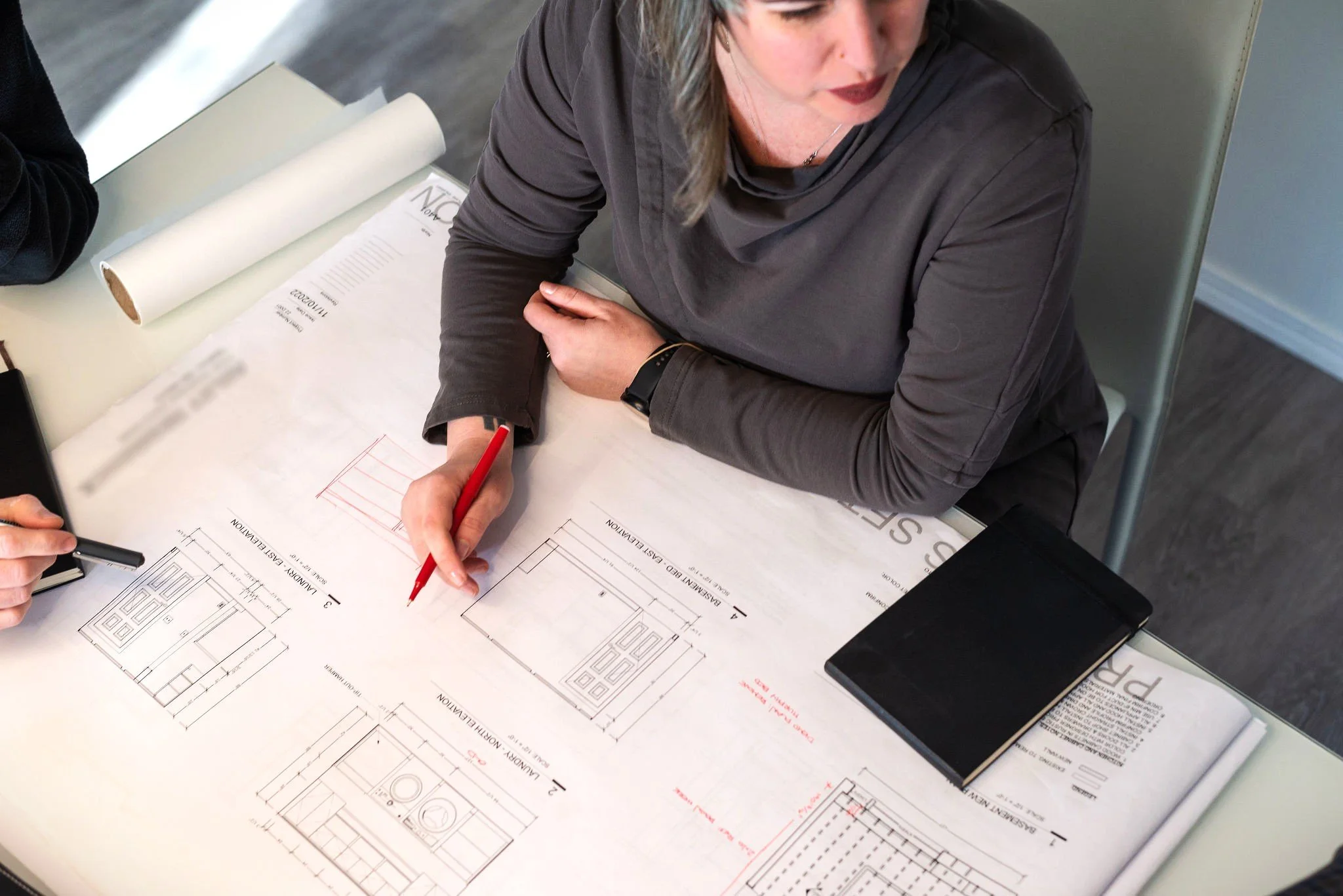






Appliances or cabinets first? Learn when to choose appliances for your kitchen remodel and how early coordination with custom cabinetry helps everything fit and function as intended.