
When Summer Winds Down: Designing a Home for the Rhythm of Fall
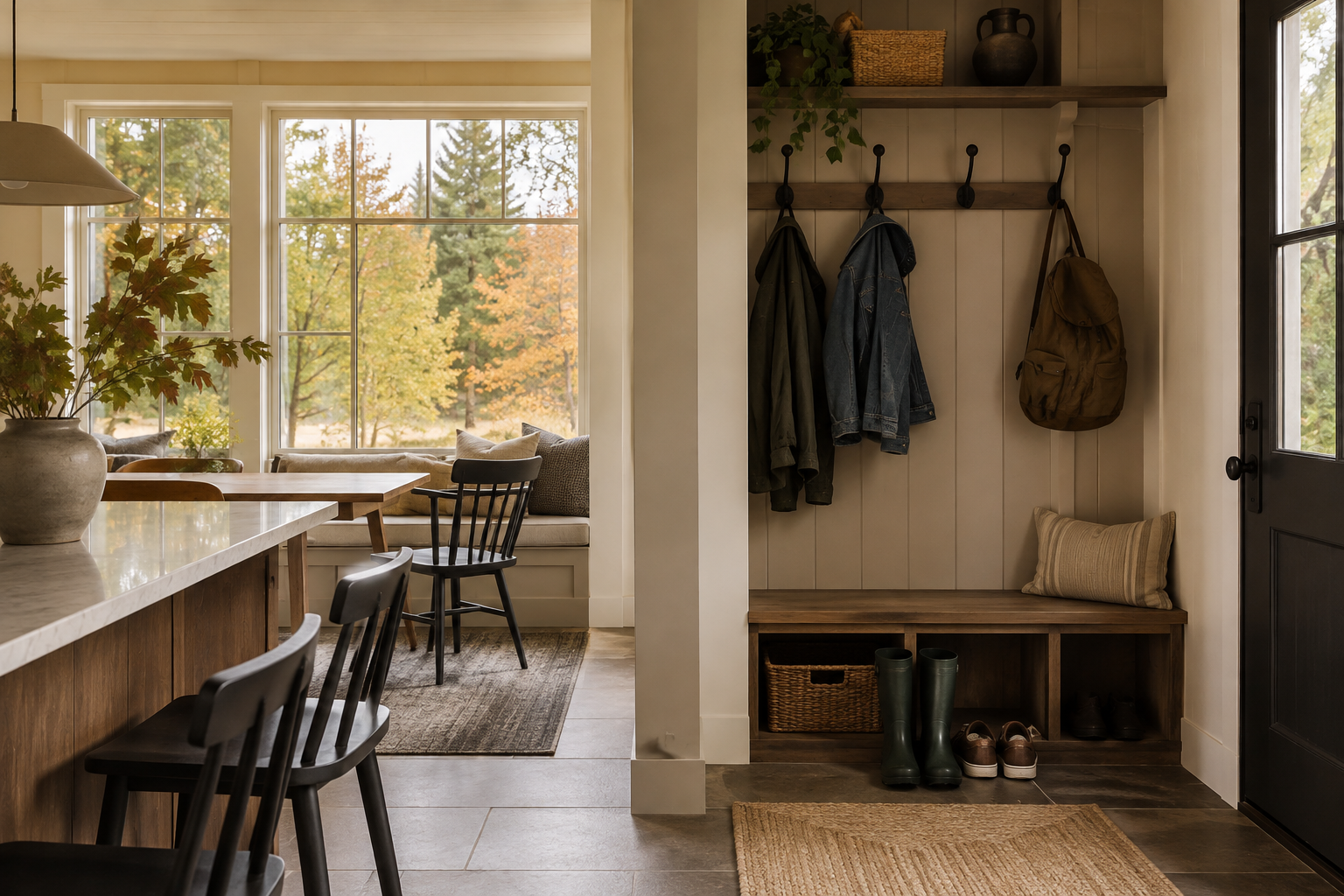
There’s a particular shift that happens at the end of summer here in the Pacific Northwest. The afternoons can still be warm, the windows are still open, and we’re not quite ready to admit that summer is winding down. But the signs start showing up anyway. Backpacks reappear by the door, calendars begin filling up, mornings become more structured, and the evening light starts disappearing a little earlier.
It’s also the time of year when you begin to notice how much your home changes with the seasons. During summer, life tends to spread out. Doors stay open, meals move outside, shoes get kicked off wherever they land, and kids seem to move between the house and yard approximately 400 times a day. There’s a little more room for disorder because everyone is operating on summer time.
Then school starts, work schedules settle back in, and the house suddenly has a different job to do. Mornings need to run efficiently. Backpacks, jackets, shoes, lunch boxes, sports gear, and paperwork all need somewhere to go. The kitchen becomes the breakfast station in the morning, the homework zone in the afternoon, and the place where everyone seems to congregate while dinner is being made.
These aren’t necessarily the things people dream about when they start designing or renovating a home. Nobody shows up to their first design meeting excited to discuss where the wet backpacks are going to live. But those everyday details have a huge impact on how a house actually feels to live in.
Designing for Real Life
Good residential design considers what happens between the bigger moments. Where do you put your keys when you walk through the door? Is there somewhere to sit while taking off muddy shoes? Where does a wet raincoat go in November? Can someone make dinner while another person works at the kitchen island without everyone getting in each other’s way?
Sometimes the solutions are surprisingly simple. A well-placed bench, enough hooks, accessible storage, a mudroom that can actually handle mud, or a kitchen island designed for more than food prep can take a lot of friction out of everyday routines. These features may not be the showpieces of a home, but they’re often the things you end up appreciating the most.
This becomes especially important in the Pacific Northwest, where our homes need to work very differently from one season to the next. The entryway that collects sandals and beach bags in August may need to handle rain boots, coats, umbrellas, and muddy paws a few months later. Designing for that reality means thinking beyond how a space looks and considering how it will be used throughout the entire year.
The Light Is Changing, Too
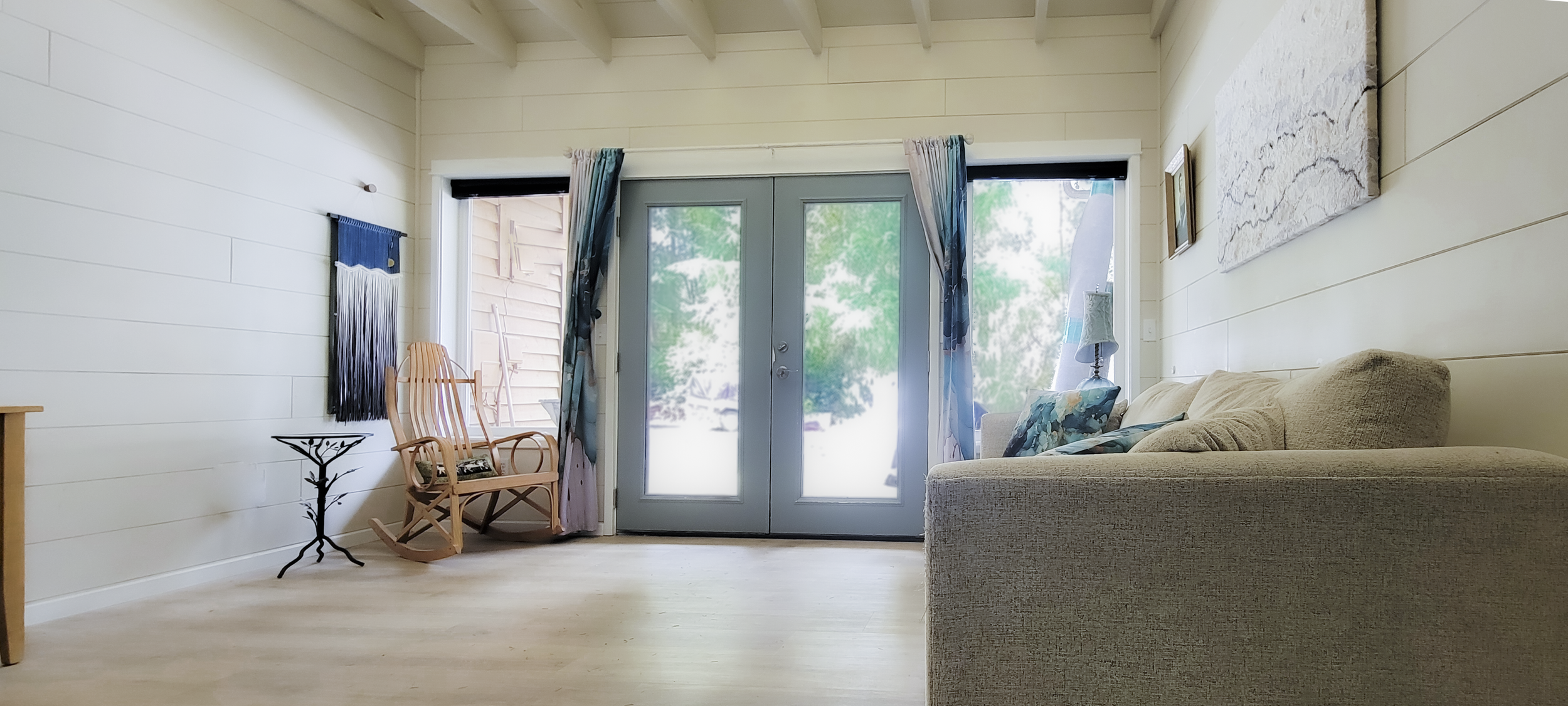
The transition into fall isn’t only about schedules. The house itself begins to feel different as the days get shorter. Rooms that stay bright well into the evening during July start losing their light earlier, and we naturally begin spending more time indoors.
That seasonal change is one reason natural light, window placement, orientation, and interior lighting matter so much in residential design. A room shouldn’t only feel beautiful on a sunny summer afternoon with every door open. It should also feel comfortable on a gray November morning when the rain has been coming down since breakfast.
Layered lighting becomes especially valuable as we move into the darker months. Instead of relying on one overhead fixture to do everything, a combination of ambient, task, and accent lighting allows a room to adjust as the day changes. It makes the transition from a bright afternoon to an early evening feel warmer and more natural.
Making Room for the Next Season
There’s something we love about this in-between part of the year. Summer isn’t completely gone, but fall is starting to make itself known. School begins, routines return, jackets slowly migrate back toward the front door, and the house starts closing up a little earlier each evening.
It’s also a good reminder that our homes are constantly adapting along with us. The way we use a room in August may be completely different from how we use it in January, and the needs of a family will continue changing long after a project is finished.
The best homes make room for those changes. They work on busy school mornings and slow summer evenings, during rainy weekends and holiday gatherings, and through all of the ordinary days that make up most of our lives.
As summer winds down and another season begins, we’re reminded that thoughtful design isn’t really about creating a home for one perfect moment. It’s about creating one that works beautifully through all of them.

Waldron Designs, LLC is passionate about designing spaces rooted in their context and responsive to the natural environment. Are you ready to create sustainable permanence with your home?
GET IN TOUCH!