
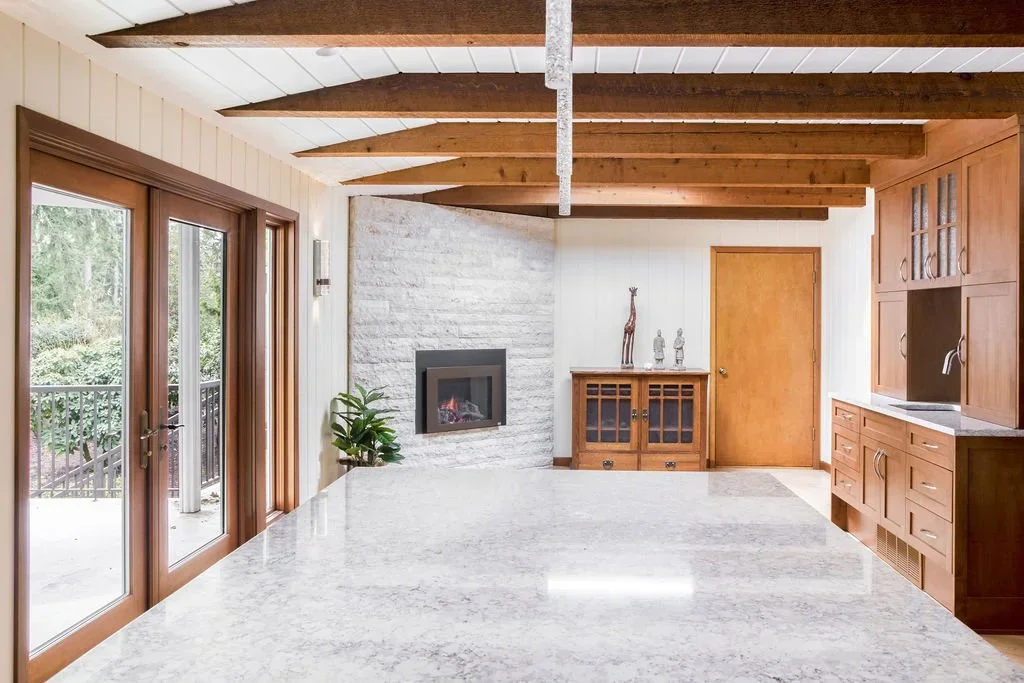
The Adelaide project connects the fireplace with the surrounding kitchen and living space.
Kitchen design and fireplace consulting: Waldron Designs
Photography: Ellie Lillstrom
A fireplace can anchor a room, but its surround needs to do more than look good in a photograph. The material, proportions, and detailing should work with your fireplace, your home’s architecture, and the way you use the space.
When comparing fireplace surround materials, start with the appliance requirements. Then consider appearance, maintenance, and the full installation cost. Natural stone, porcelain tile, brick, and metal each offer different design possibilities, but the right choice depends on the specific product and installation.
Start with the Fireplace, Then Choose the Finish
Before collecting material samples, identify whether you are keeping your existing fireplace or replacing it. A new appliance may change the opening size, required clearances, and options for finishing the surrounding wall.
The surround is the visible facing around the fireplace opening. The hearth is the surface below or in front of it, while the mantel is the shelf or architectural element above. These components can have different requirements. A finish suitable for a decorative surround should never be assumed suitable inside the firebox.
For a manufactured fireplace or insert, review the exact model’s installation instructions with your installer. Manufacturers such as Heat & Glo provide model-specific fireplace installation manuals. For an existing masonry fireplace, have a qualified fireplace professional assess the conditions before redesigning it. Confirm the complete installation, including backing, setting materials, and nearby combustible finishes.
That review gives you a useful starting point: materials you can actually consider for your project.
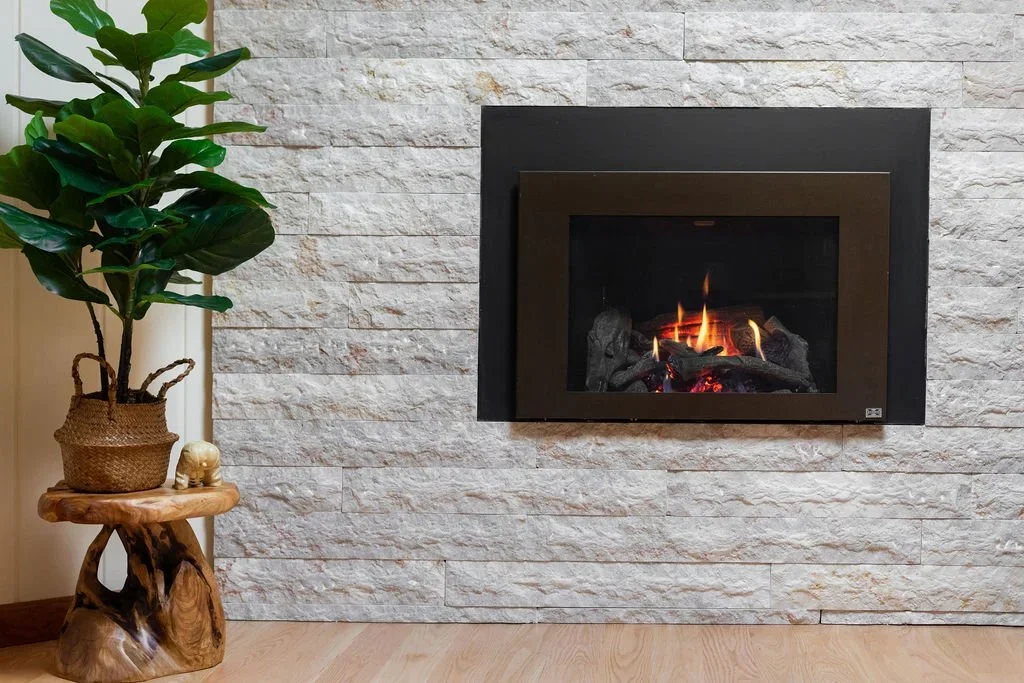
Material texture and the detailing around the fireplace opening influence the finished design.
Adelaide project, fireplace consulting by Waldron Designs
Photography: Ellie Lillstrom
Natural Stone: Individual Character and Variation
Natural stone offers variation that can make a fireplace feel closely connected to the home. Marble’s veining can become a focal point, while quieter stone selections can support a more restrained design.
Look beyond a small sample. For a slab surround, review the actual slab and discuss how its pattern will be positioned around the opening. Vein direction, seams, and exposed edges all affect the finished composition.
Maintenance also varies by stone. The Natural Stone Institute’s natural stone care and cleaning guidance explains that acidic cleaners can etch marble and other calcium-based stones, and sealing needs depend on the particular material. Ask your supplier for care instructions and confirm that any resin treatments, backing, or coatings are appropriate for the proposed fireplace application.
Choose natural stone when its individual variation contributes something meaningful to the room, and when you are comfortable with its care requirements.
Porcelain Tile and Slabs: Flexibility in Scale and Pattern
Porcelain offers a wide range of appearances, from understated solid colors to stone-inspired patterns. Smaller tiles can introduce rhythm and texture, while large-format tiles or slabs can create a more continuous surface with fewer joints.
MSI lists fireplace surrounds among the residential applications for its Stile porcelain slabs. That makes porcelain worth exploring, but approval still needs to be checked for the exact product and installation.
Pay attention to layout before ordering. Where will grout joints fall? How will corners turn? What will the exposed edge look like? A convincing stone pattern on the face may look different at a cut edge, so edge detailing deserves an early conversation.
Porcelain is a useful option when you want control over pattern and scale, with maintenance guided by the selected tile, grout, and installation system.
Brick: Texture That Can Connect Old and New
Brick can give a fireplace a strong architectural presence. Its texture may complement an older home or bring warmth to a room with simpler finishes.

Brick brings texture, color variation, and a repeating pattern to a fireplace surround.
Before covering an existing brick surround, consider whether it could become part of the new design. A different mantel, revised adjacent cabinetry, or changes elsewhere in the room may improve the composition without replacing the facing.
If you are considering paint, a coating, or new brick veneer, have the proposed product and installation reviewed for the location. Include the depth of the new finish in the design, particularly where it meets the hearth, wall, and fireplace opening.
Metal: A Precise Architectural Detail
A metal surround can frame the opening or extend into a larger feature wall. Its appeal often lies in the detailing: folded edges, joint placement, and the relationship between the metal and neighboring finishes.

A metal finish can introduce a different texture and visual character to the fireplace design.
Discuss finish samples with the fabricator, including how the surface will show fingerprints, scratches, or changes over time. Confirm the fabrication and attachment details with the fireplace installer before treating the design as final.
Metal is worth considering when you want the fireplace to read as a deliberate architectural element.
Can You Use Quartz for a Fireplace Surround?
Quartz countertops and fireplace surrounds face different conditions. A surface that performs well in a kitchen is not automatically approved for use near a fireplace.
Caesarstone’s quartz care guide cautions that sudden temperature changes can damage its quartz surfaces. For a proposed surround, check the surface manufacturer’s application guidance alongside the fireplace instructions, and obtain confirmation for the specific installation.
Our article, Can I Use Quartz on My Fireplace Surround?, explores this question and why coordination with product representatives matters.
Design the Whole Fireplace Wall
The surround should feel connected to the room. Consider its width and height alongside the ceiling, windows, and furniture arrangement. If the plan includes built-in cabinetry, resolve its relationship to the fireplace before finalizing either element.
For Pacific Northwest homes, stone and textured finishes can complement surrounding landscape views. The goal is to choose a material that belongs in the home, rather than reproducing an inspiration image without considering its context.
Compare samples in your room’s daylight and evening lighting. Then review a drawing that shows the surround, hearth, mantel, and adjacent elements together.
Compare Installed Cost, Not Just Material Price
A material’s purchase price tells only part of the story. Ask for a scope that includes demolition, surface preparation, fabrication, and installation. Clarify whether hearth work, appliance replacement, or changes to nearby cabinetry are included.
A detailed estimate makes it easier to compare options fairly and decide where your budget will have the greatest visual impact.
Plan Your Fireplace as Part of the Remodel
The strongest fireplace designs bring material selection and architectural planning together early. Resolving proportions, product requirements, and installation details before ordering helps keep the finished result aligned with the room.
Planning a fireplace update as part of a larger renovation? Contact Waldron Designs to discuss your project and how the fireplace can fit into the overall design.



Choosing a fireplace surround starts with the fireplace itself. Explore material options, design details, and practical considerations for your remodel.