
5 Ways Wildfire Smoke Is Changing Home Design in Northern California and the Pacific Northwest

Wildfire season is changing life across Northern California and the Pacific Northwest. Even in areas far from active fire zones, smoke events now last for days or weeks, affecting air quality, daily routines, and how homes perform.
For architects and designers, this has become more than a seasonal concern. Homeowners are asking new questions about indoor air quality, ventilation, material performance, and long-term resilience. The result is a noticeable shift in residential architecture across the region.
Smoke-resistant home design is no longer a niche topic. It is becoming part of the foundation of healthy, high-performance homes.
Why Indoor Air Quality Is Driving Design Decisions
Many homes throughout the Pacific Northwest were built around mild weather and natural ventilation. Opening windows was considered part of comfortable living. During wildfire season, that approach no longer works.
Smoke infiltration can happen through small gaps around windows, doors, attics, crawl spaces, and poorly sealed wall assemblies. Once smoke enters the home, it can linger in insulation, fabrics, and ventilation systems long after outdoor conditions improve.
That reality is pushing architects toward tighter building envelopes, smarter ventilation systems, and more intentional material choices.
1. Tighter Building Envelopes Are Becoming Essential
One of the biggest shifts in modern residential design is the focus on controlling air movement.
A well-sealed building envelope helps reduce uncontrolled smoke infiltration and improve overall energy performance. In the Pacific Northwest climate, this approach supports both comfort and durability year-round.
Key strategies include:
High-performance windows and exterior doors
Continuous insulation systems
Air sealing around penetrations and transitions
Better moisture management within wall assemblies
This level of detailing is increasingly important in wildfire-prone regions, especially as smoke events become more frequent.
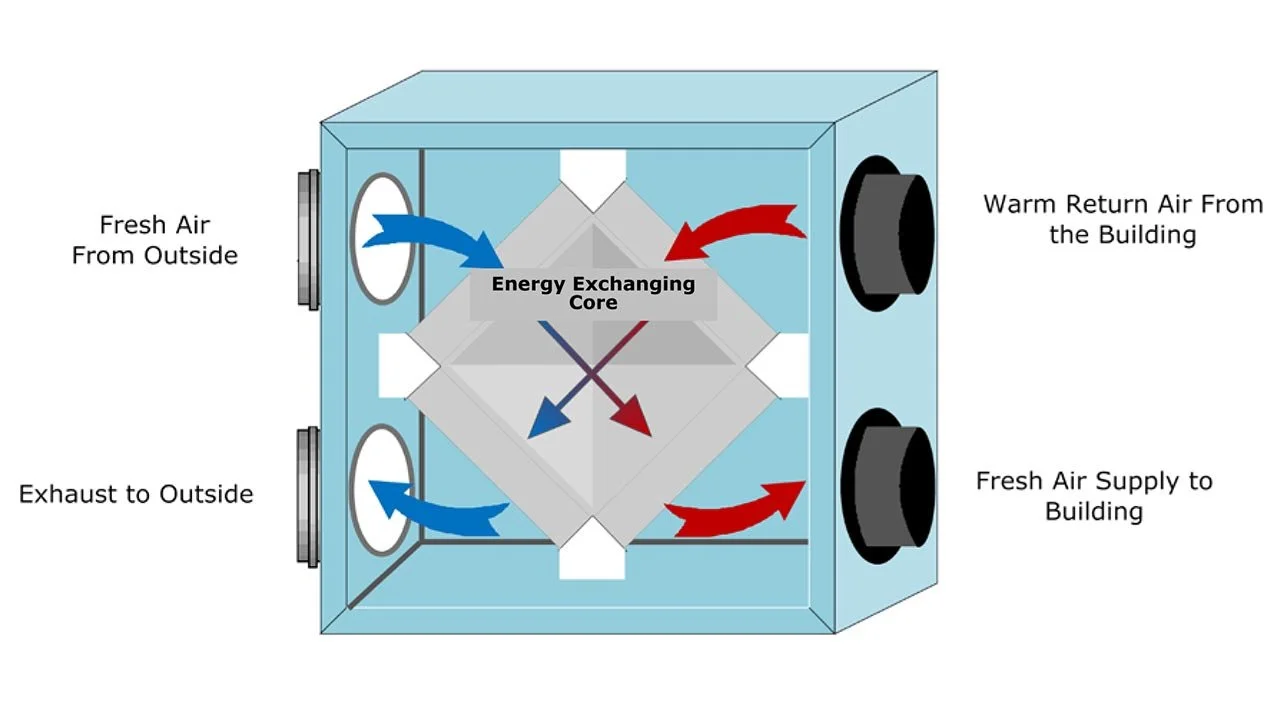
Energy Recovery Ventilators (ERVs) exchange stale indoor air with fresh outdoor air, recovering heat and moisture from the exhaust air and transferring it to supply air.
Photo Credit: Cold Climate Housing Research Center
2. ERVs Are Becoming Standard in High-Performance Homes
Energy Recovery Ventilators, commonly called ERVs, are becoming far more common in residential architecture throughout Northern California and the Pacific Northwest.
These systems allow homes to bring in filtered fresh air while exhausting stale indoor air in a controlled way. Unlike simply opening a window, ERVs help maintain healthier indoor air quality during smoke events.
They also support:
Better humidity control
Improved indoor comfort
More efficient heating and cooling performance
Healthier airflow throughout the home
For many homeowners, indoor air quality is now just as important as energy efficiency.
3. Filtration Systems Are Getting Smarter
Standard HVAC filters are often not designed to withstand prolonged exposure to wildfire smoke.
As a result, more homeowners are investing in advanced filtration systems that can better capture fine smoke particles and improve indoor air conditions during fire season.
Many newer homes are now incorporating:
MERV 13 or higher filtration systems
Dedicated air purification systems
Zoned HVAC systems
Mechanical ventilation designed around indoor air quality
Smart monitoring systems for indoor air conditions
This is one of the fastest-growing conversations in residential building science right now, especially throughout California, Oregon, and Washington.
4. Exterior Materials Are Being Evaluated Differently
Wildfire resilience is also influencing material selection on the exterior of the home.
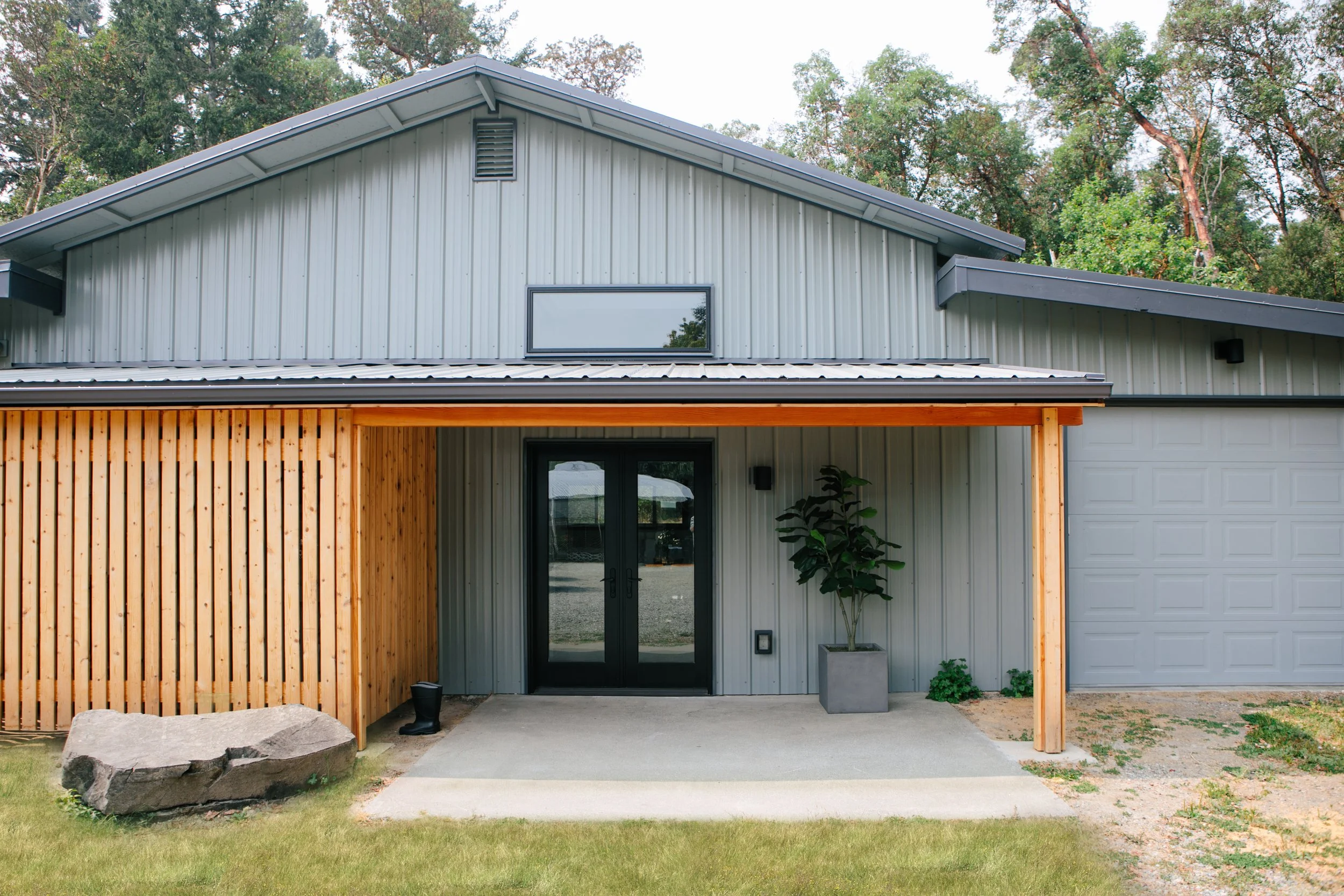
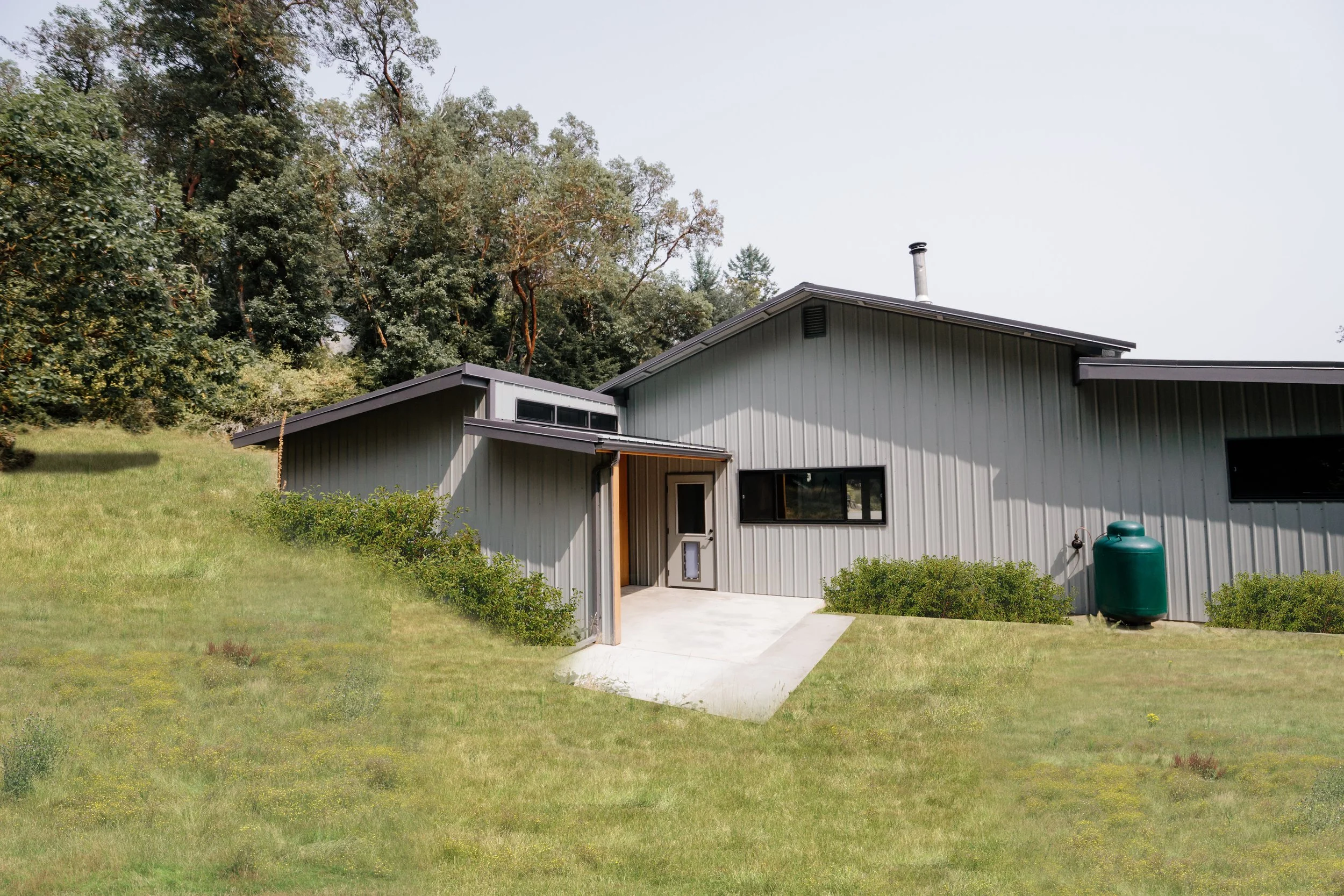
Architects are increasingly prioritizing materials that are more heat- and ember-resistant, as well as more durable in the long term. At the same time, homeowners are looking for solutions that still feel appropriate for the Pacific Northwest landscape and architectural style.
Common considerations now include metal roofing, non-combustible siding, tempered glass, and ember-resistant vent systems.
The conversation has shifted away from purely aesthetic decisions. Material performance now carries much more weight during the design process.
5. Landscape Planning Is Becoming Part of Fire Resilience
Landscape design plays a significant role in how a property responds to wildfire conditions.
Defensible space strategies help reduce fire risk while still supporting natural, regionally appropriate landscapes. In the Pacific Northwest, this often requires balancing wildfire awareness with stormwater management and native planting strategies.
A well-designed site plan may include:
Reduced fuel loads near the structure
Gravel or hardscape transition zones
Fire-conscious planting layouts
Smarter irrigation planning
Strategic spacing between vegetation and structures
The goal is not to create harsh or barren landscapes. It is to design outdoor spaces that are both resilient and functional.
Architecture Is Responding to a Different Reality
Wildfire smoke is changing how homes are designed across Northern California and the Pacific Northwest. Homeowners are paying closer attention to air quality, material performance, ventilation, and resilience than ever before.
That shift is pushing residential architecture toward healthier, better-performing homes that can adapt to changing environmental conditions without sacrificing comfort or aesthetics.
The conversation around sustainability is evolving, too. A resilient home is not just energy efficient. It should also protect the people living inside it when outdoor conditions become unpredictable.

Waldron Designs, LLC is passionate about designing spaces rooted in their context and responsive to the natural environment. Are you ready to create sustainable permanence with your home?
GET IN TOUCH!