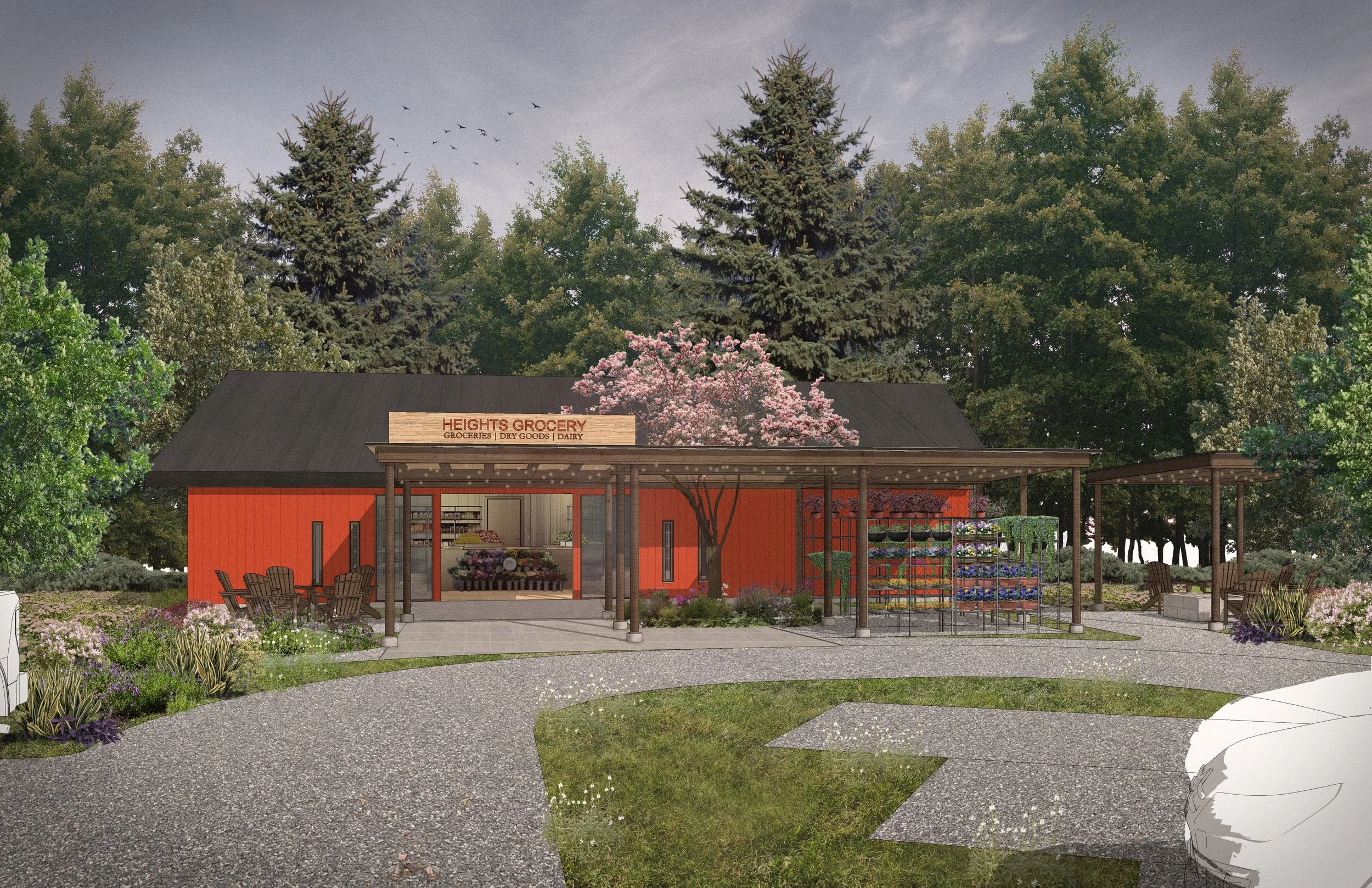
Some buildings hold more than walls and rooflines. They hold memory, routine, and community identity.
That’s what made the Heights Grocery project on Vashon Island meaningful to our team at Waldron Designs.
Located in the historic former Vashon-Maury Grange Hall, the building has served the island community in different ways for decades. The goal was never to erase that history or replace it with something trendy. The goal was to carefully restore and adapt the structure so it could continue serving the community for generations to come.
Projects like this require patience, coordination, technical problem-solving, and a clear understanding of how preservation and modern performance standards can work together.
Adaptive Reuse Is One of the Most Sustainable Choices We Can Make
Sustainability conversations often focus on finishes, products, or energy systems. Those things matter, but one of the biggest environmental impacts in construction comes from demolition and rebuilding.
When an existing building can be preserved and strengthened, it reduces waste, preserves embodied carbon, and maintains the character that gives communities their identity.
That philosophy shaped the Heights Grocery project from the beginning.
Instead of treating the original structure as something to cover up or replace, the design process focused on working with the building itself. Existing structural elements were preserved wherever possible, while modern upgrades were integrated carefully to support long-term safety, durability, and functionality.
Older buildings come with real constraints:
Structural limitations
Evolving code requirements
Moisture concerns
Accessibility upgrades
Energy performance challenges
Unknown existing conditions hidden inside walls and framing
Solving those issues requires far more than surface-level design work. It takes coordination between designers, engineers, contractors, and permitting agencies from the earliest phases of the project.
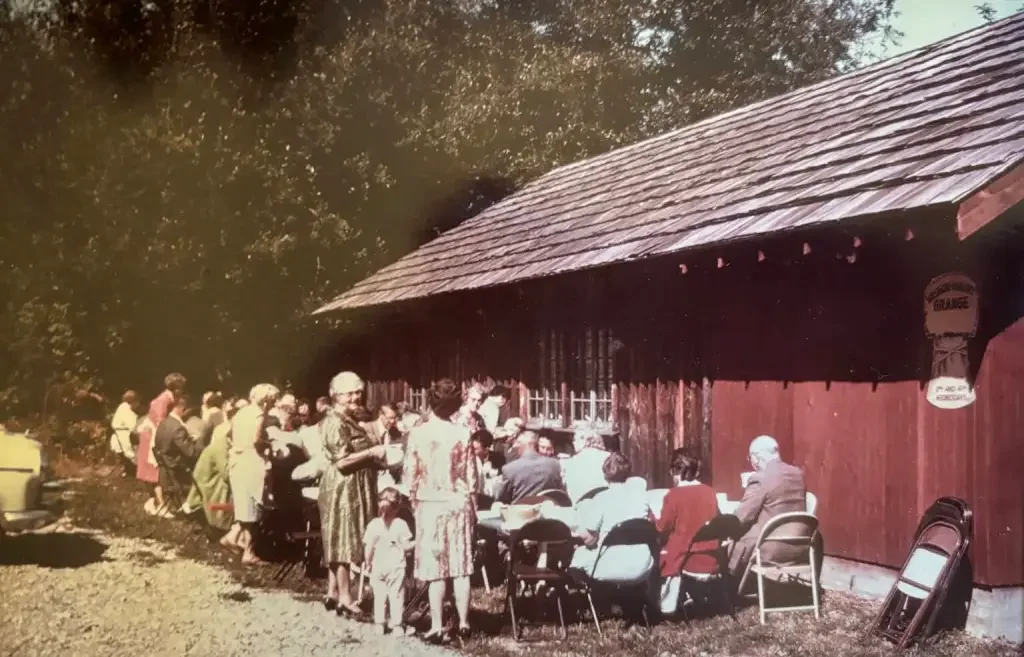
A gathering at the Vashon-Maury Grange Hall in 1962.
Photo Credit: Vashon Heritage Museum
Preserving Character Without Freezing a Building in Time
Historic preservation is not about turning a building into a museum piece.
For a space to remain useful, it has to evolve. The challenge is making improvements without losing the qualities that made the building meaningful in the first place.
At Heights Grocery, maintaining the original character of the structure mattered. The existing timber framing and historic materials carry the story of the building and its role within the community. Our approach focused on preserving those elements while integrating the structural reinforcement, infrastructure upgrades, and commercial systems needed for a modern grocery space.
That balance is where thoughtful design matters most.
Every new intervention affects the overall experience of the building. Lighting, insulation, ventilation, refrigeration systems, accessibility requirements, and structural upgrades all have to work together without overwhelming the original architecture.
Done correctly, the space still feels honest to its history while functioning for modern use.
Community Spaces Matter More Than Ever
Independent neighborhood spaces are becoming increasingly rare.
Projects like Heights Grocery are important because they create more than commercial activity. They support daily interaction, access to local food, walkability, and community resilience. Especially in smaller communities like Vashon Island, those spaces become part of the social infrastructure people rely on.
Good design should strengthen that connection, not dilute it.
That is one reason adaptive reuse projects often carry so much responsibility. These buildings already mean something to people before construction even begins. The work is not simply about creating a functional space. It is about respecting the role the building already plays within the community.
The Reality Behind Complex Restoration Projects
Projects like this rarely move quickly.
Restoration and adaptive reuse work often involves years of planning, permitting, structural analysis, funding coordination, and phased decision-making before construction can proceed. Existing buildings introduce layers of complexity that new construction often does not.
That process can be frustrating at times, but thorough planning matters. Careful documentation, engineering coordination, and early research reduce risk later during permitting and construction.
For our team, this project reflects the kind of work we care deeply about:
Preservation-focused design
Sustainable building strategies
Long-term durability
Community-centered spaces
Thoughtful integration between old and new
The result is not about creating something flashy. It is about creating something lasting.
Looking Ahead for Heights Grocery
The Heights Grocery project represents years of persistence from everyone involved, including ownership, consultants, engineers, contractors, and community members committed to seeing the project move forward.
We are proud to have contributed to a project that prioritizes both sustainability and community impact in a meaningful, practical way.
Buildings like this deserve thoughtful stewardship. When handled carefully, they continue serving people long after trends and development cycles change around them.
To learn more about the Heights Grocery project, visit Heights Grocery.