
Why Incomplete Plans Delay Permits and Increase Building Risk
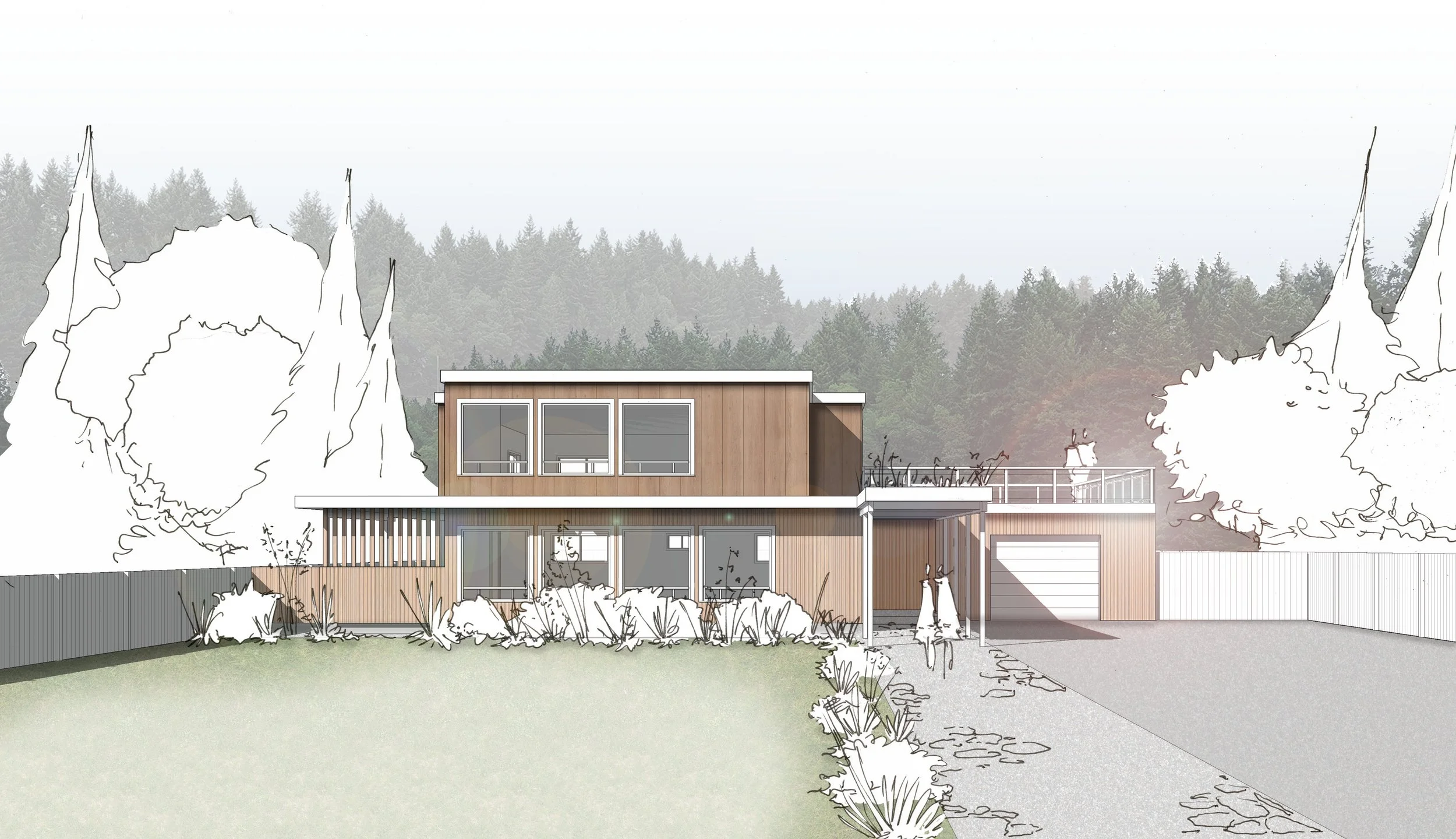
When a project stalls in permitting, the issue is rarely the idea. It is the level of detail behind it.
Many projects are labeled “complete,” but they actually contain only a partial design. Missing information forces jurisdictions to ask questions, request revisions, or reject submittals outright. That delay costs time, money, and momentum.
A complete design is not a formality. It is the foundation that allows a project to move forward without unnecessary friction.
What “Complete Plans” Actually Mean in Residential Design
A complete set of plans goes beyond layout and aesthetics. It defines how the structure will perform, how it will be built, and how it meets code.
At a minimum, complete plans include:
Dimensioned floor plans with clear spatial relationships
Structural coordination, including load paths and framing intent
Wall sections that define insulation, moisture control, and assemblies
Door and window schedules with sizes, types, and performance specs
Electrical and lighting layouts aligned with real use
Site information that reflects actual conditions, not assumptions
Without these elements, plans leave too much open to interpretation. That uncertainty is exactly what permitting departments are trained to flag.
The Real Cost of Incomplete Drawings
Incomplete drawings do not just slow down permitting. They create downstream issues that are harder and more expensive to fix.
Here is what typically happens:
Plan Check Corrections Multiply
Jurisdictions issue correction notices for missing or unclear information. Each round adds days or weeks.Engineering Gets Delayed
Structural engineers cannot finalize calculations without a resolved design. That creates a bottleneck.Contractor Pricing Becomes Unreliable
Builders are forced to estimate based on assumptions, which leads to change orders later.Scope Gaps Show Up Mid-Construction
Missing details turn into field decisions. Those decisions often cost more than resolving them upfront.
Why Permitting Departments Push Back
Permitting is not designed to be difficult. It is designed to reduce risk.
When a plan set lacks clarity, the jurisdiction cannot confirm:
Code compliance
Structural integrity
Energy performance
Life safety requirements
That uncertainty shifts liability. The result is a request for more information, or a rejection.
Complete plans remove that ambiguity. They answer questions before they are asked.
How a Full-Service Design Process Prevents Delays
A structured design process builds completeness in stages. Each phase resolves a different layer of the project.
Schematic Design establishes layout and feasibility within site constraints
Design Development refines systems, materials, and coordination
Construction Documents define every detail required for permitting and construction
Skipping steps or compressing phases leads to gaps. Those gaps are what show up later as delays.
A Common Scenario We See
A client brings in a set of drawings that looks finished at first glance. The layout is there. The elevations are there. But key information is missing.
There are no wall sections. Structural intent is unclear. Window performance is undefined. The site plan does not reflect actual grading.
If submitted as-is, the jurisdiction would issue multiple corrections. Engineering would need to pause. The project would lose weeks.
Instead, we rebuild the set to include the missing technical layers. Once complete, the same project moves through permitting with minimal pushback.
Key Elements That Make a Design Permit-Ready
If you want to assess whether a design is ready for permitting, look for these signals:
All systems are coordinated, not treated separately
Details are resolved at connections, not left implied
Site conditions are verified and documented
Structural intent is clear enough for engineering to proceed
There are no “TBD” placeholders in critical areas
A permit-ready design leaves no open questions.
Build with Clarity, Not Assumptions
Projects move faster when the design does the heavy lifting upfront. Clear documentation reduces risk, shortens permitting timelines, and gives contractors a reliable path forward.
If your current plans feel incomplete or you are preparing for submittal, get a second set of eyes on them.
Request a design review and confirm your plans are ready for permitting before you submit.

Waldron Designs, LLC is passionate about designing spaces rooted in their context and responsive to the natural environment. Are you ready to create sustainable permanence with your home?
GET IN TOUCH!