
What Keeps Us Cozy in the Winter

Photo Credit: @cacobjopus
Thermal Comfort, Sustainable Design, and High-Performance Homes
Winter exposes every weakness in a home. Drafts appear. Cold floors become unavoidable. Heating bills spike.
Real comfort is not about cranking the thermostat. It is about how a home performs.
Thermal comfort sits at the center of sustainability, durability, and human well-being. When a house is designed and built to perform in winter, it works better all year long.
Below is what actually keeps us warm and why it matters.
1. Insulation and Air Sealing: The Foundation of Winter Comfort
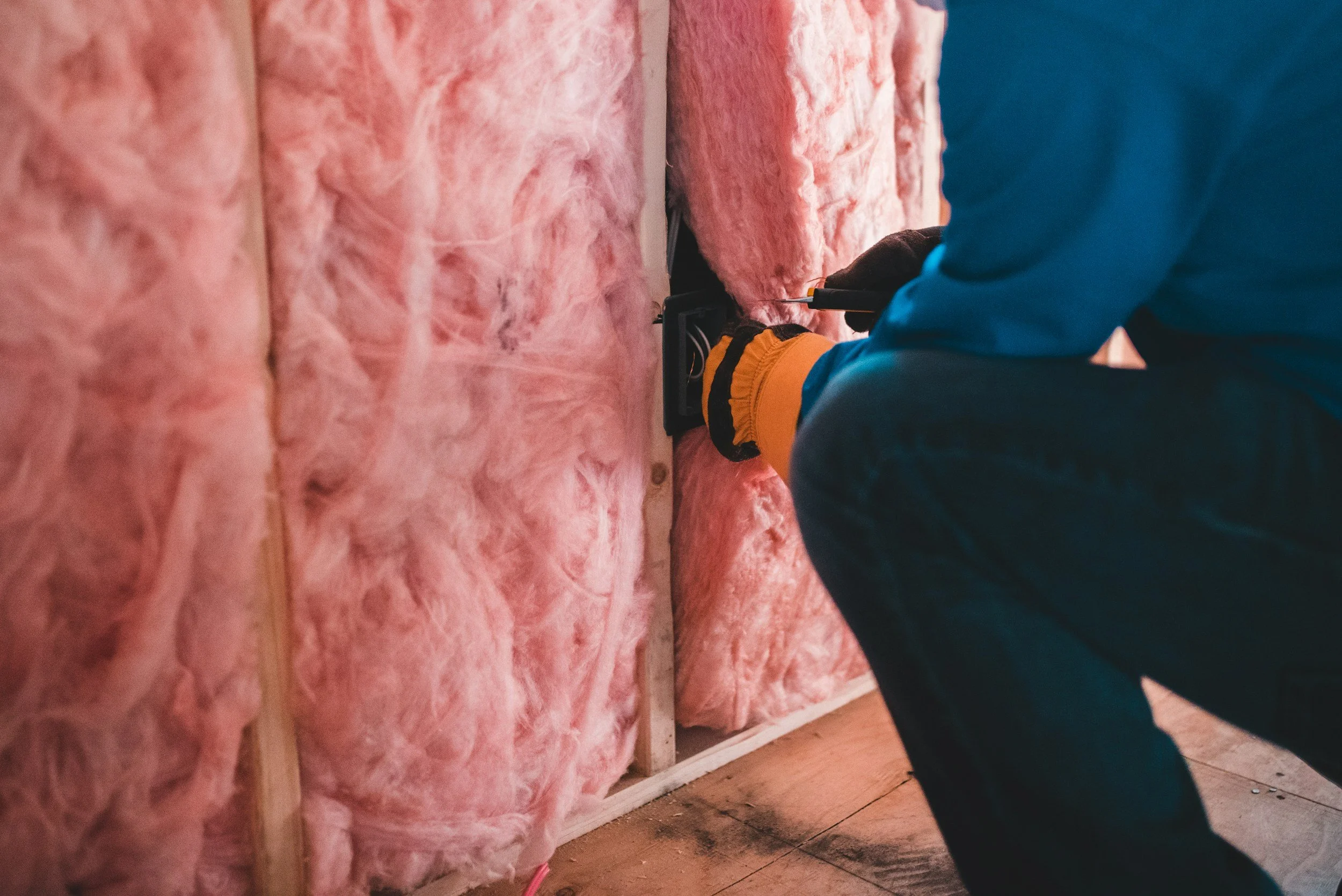
Photo Credit: @introspectivedsgn
If heat escapes, comfort disappears.
High-performance homes focus first on:
Continuous insulation
Properly sealed penetrations
Airtight building envelopes
Verified blower door testing
Insulation slows heat transfer. Air sealing prevents uncontrolled drafts. Together, they stabilize interior temperature and reduce heating demand.
From a sustainability perspective, this matters. The less energy required to heat a home, the lower the carbon footprint. From a performance perspective, airtight homes reduce moisture movement, which protects framing and finishes from long-term damage.
Cold air leaks are not charming. They are performance failures.
2. Windows, Daylight, and Heat Gain
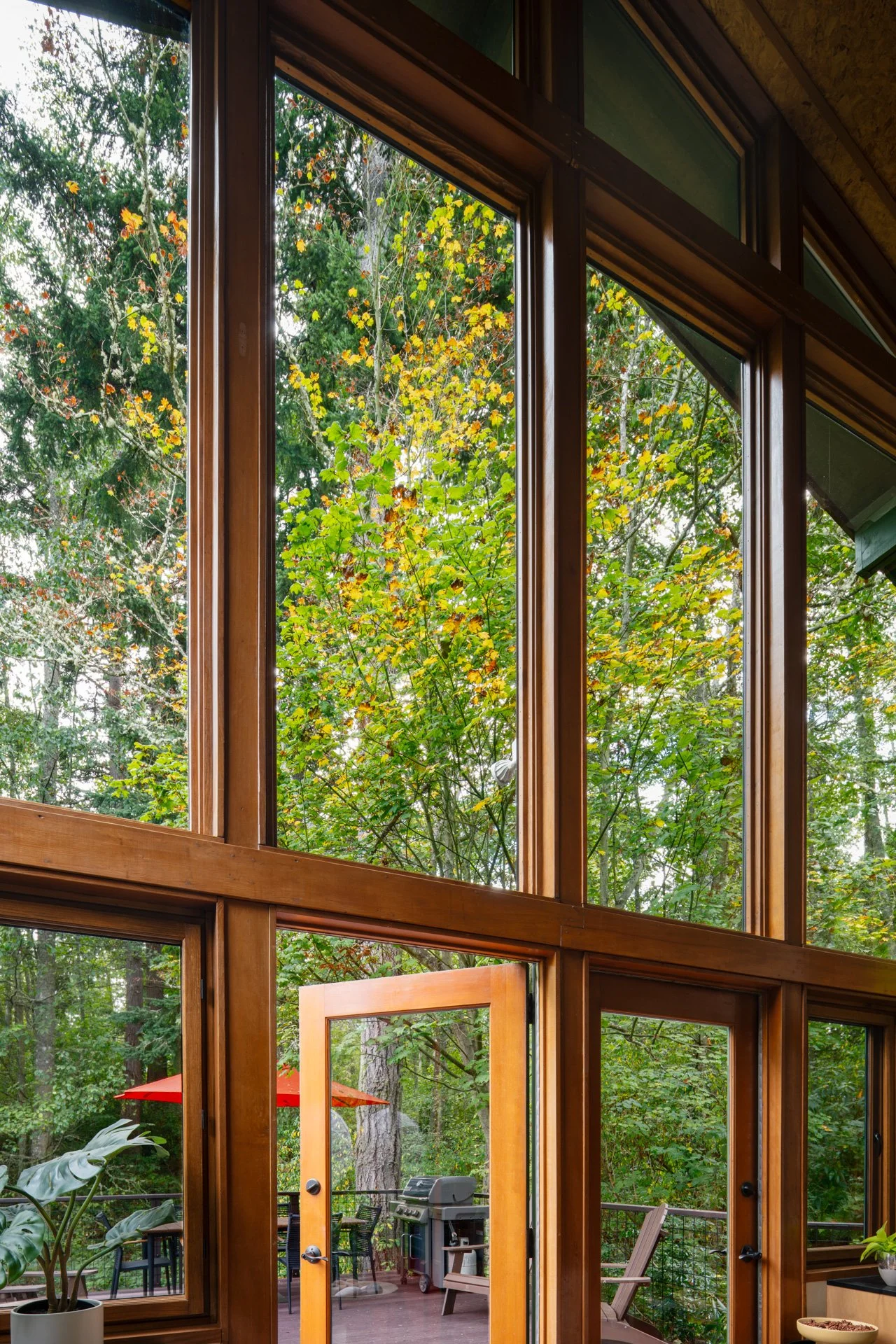
Windows can be the biggest liability in winter, or a quiet asset.
High-performance glazing includes:
Double or triple-pane glass
Low-E coatings
Thermally broken frames
Strategic orientation for passive solar gain
South-facing windows can contribute free heat during winter months. Proper shading ensures that summer overheating does not become the trade-off.
Daylight also plays a role in seasonal wellness. Natural light supports circadian rhythm and mental health, particularly in northern climates with long winter darkness.
Performance and comfort are not separate conversations. They are the same conversation.
3. Radiant Heat and Even Temperature Distribution
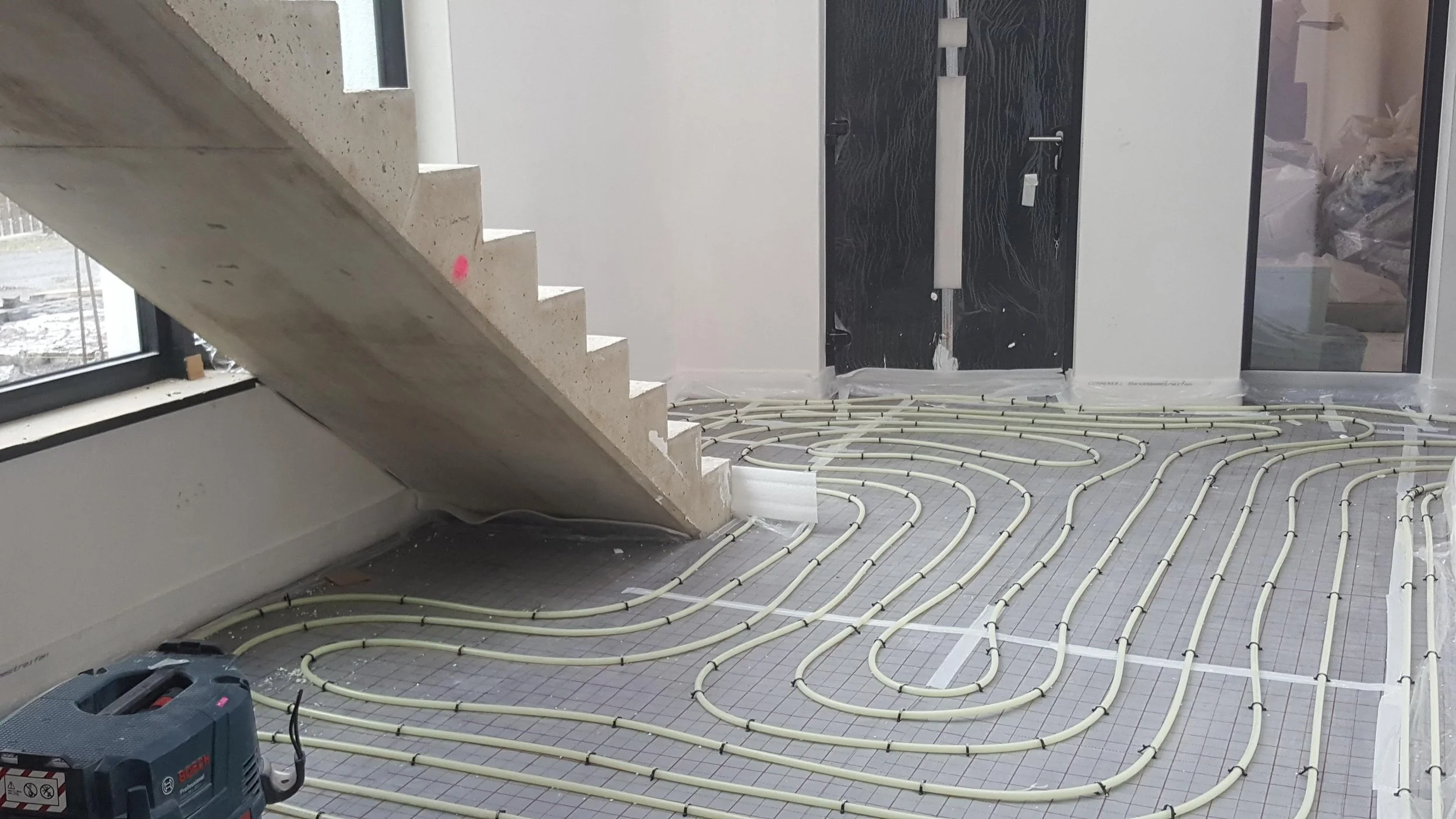
Underfloor heating pipes are installed on a grid system before the concrete pour.
Forced air heats quickly. Radiant systems heat evenly.
Radiant floor heating, hydronic panels, and well-zoned systems reduce temperature swings and eliminate cold pockets. Instead of blasting hot air from one location, heat rises gently from surfaces and distributes consistently.
Benefits include:
Improved comfort at lower thermostat settings
Reduced air movement, which limits dust circulation
Higher perceived warmth without higher energy use
When people say a house feels cozy, they usually mean the temperature is consistent. That is a performance outcome, not an accident.
4. Materials, Texture, and Thermal Mass
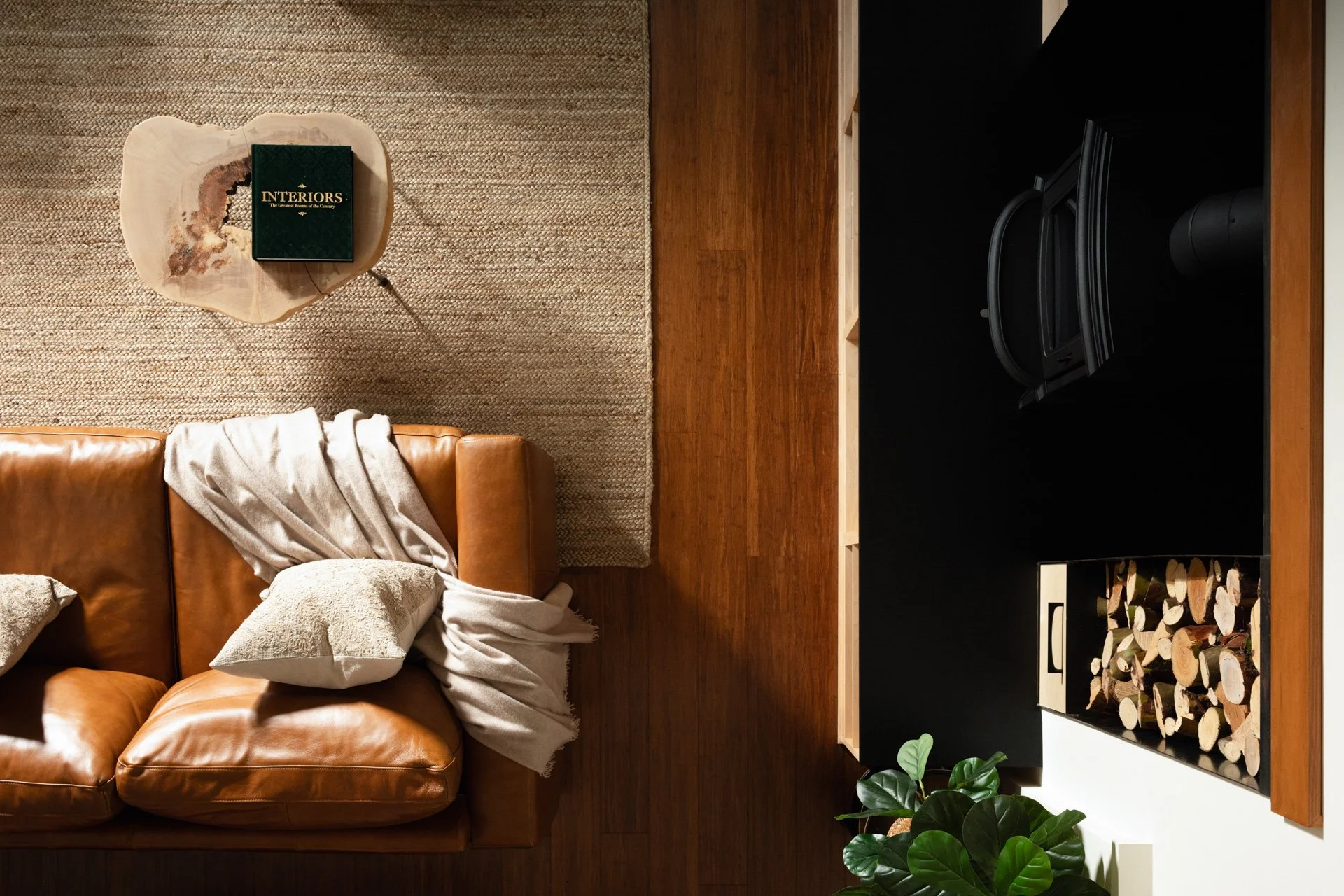
Thermal comfort is not only mechanical. It is material.
Dense materials like concrete, stone, and tile absorb and release heat slowly. This thermal mass stabilizes temperature swings and supports passive solar performance.
Soft materials contribute differently. Wool rugs, layered textiles, and natural wood finishes reduce the perception of cold surfaces and improve tactile comfort.
Sustainability shows up here as well. Natural materials, responsibly sourced wood, and durable finishes extend a home's lifespan and reduce replacement cycles.
Comfort is sensory. Performance makes it possible.
Why Thermal Comfort Is a Health Issue
Cold homes are not simply uncomfortable. They increase stress on the body. Inconsistent indoor temperatures can:
Disrupt sleep
Increase respiratory irritation
Encourage condensation and mold growth
Elevate energy costs, which impacts long-term affordability
Healthy homes maintain stable temperature, controlled humidity, and balanced ventilation. Mechanical systems should include heat recovery ventilation or energy recovery ventilation to maintain fresh air without sacrificing efficiency.
A well-performing home supports wellness without constant intervention.
Sustainability and Winter Performance Go Hand in Hand
Sustainable design is often misunderstood as aesthetic or trend-driven. In reality, it is performance-driven.
A sustainable winter home:
Requires less energy to heat
Uses durable materials that last
Maintains indoor air quality
Reduces carbon emissions
Protects long-term structural integrity
If a house works in January, it works in July.
Thermal comfort is not a luxury upgrade. It is a baseline standard for responsible design.
Practical Steps to Improve Winter Comfort
For homeowners evaluating their space, start here:
Schedule an energy audit.
Test for air leakage.
Upgrade insulation before upgrading finishes.
Evaluate window performance.
Consider zoned or radiant heating systems.
Monitor indoor humidity. Ideal winter range is 30 to 50 percent.
Performance improvements typically offer higher ROI than cosmetic upgrades.
Comfort is measurable. And it is fixable.
Final Thought
Cozy is not about candles and heavy blankets. It is about how a home holds heat, manages air, and supports the people inside it.
Design for thermal comfort. Prioritize sustainability. Demand performance.
Winter will test your house. The question is whether your house is ready.

Waldron Designs, LLC is passionate about designing spaces rooted in their context and responsive to the natural environment. Are you ready to create sustainable permanence with your home?
GET IN TOUCH!