
The 5 Phases of Design: A Complete Guide to the Residential Design Process
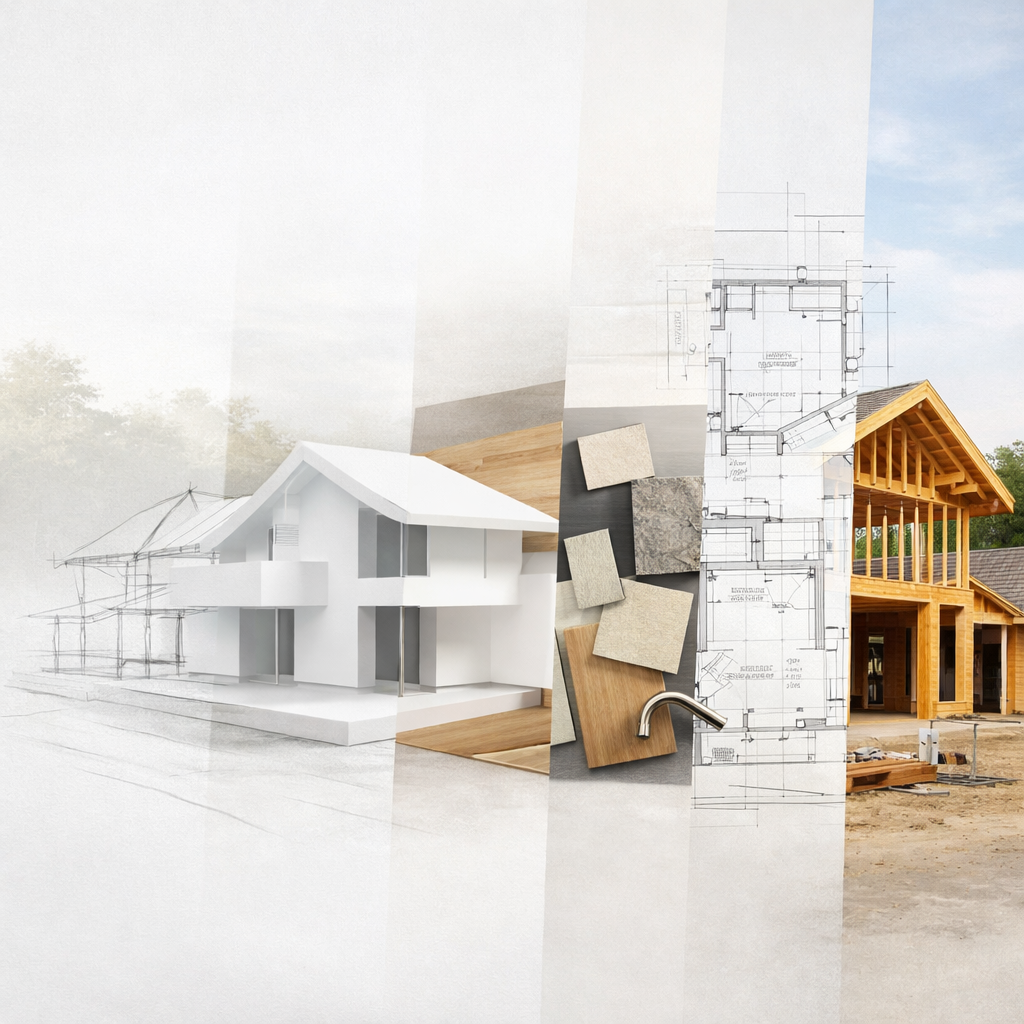
Have you ever wondered why some projects run smoothly while others fall apart?
It comes down to process. The five phases of design define how a project takes shape, performs, and ultimately succeeds.
Good design does not happen by accident. It is planned, tested, and refined.
What Are the 5 Phases of Design?
Every well-executed residential project follows a structured path:
Predesign
Schematic Design
Design Development
Construction Documents
Construction Administration
Each phase solves a different set of problems. Skipping one does not save time. It shifts risk forward, where mistakes cost more.
Step 1. Predesign: Defining Constraints Early
This is upfront work that prevents delays later.
This phase grounds the project in reality before design begins.
Key focus areas:
Site conditions and limitations
Jurisdiction and permitting requirements
Budget alignment
Project goals and priorities
Predesign reduces risk by identifying what is possible from the start.
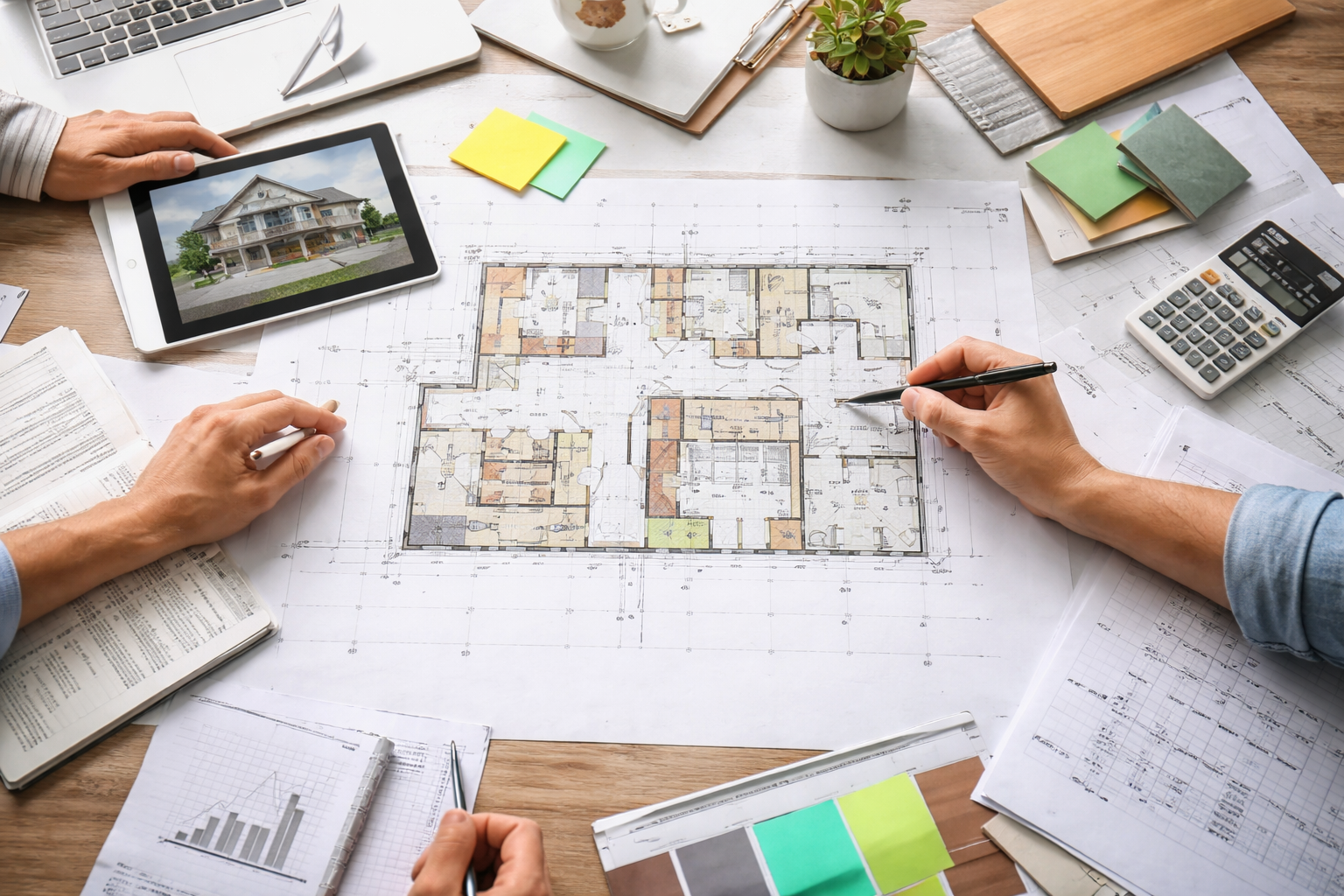
Step 2. Schematic Design: Testing Ideas
This phase brings clarity.
Concepts are explored, compared, and refined. Early visuals reveal what works and what does not.
What happens here:
Layout options are created
Massing and spatial relationships are tested
Nonfunctional ideas are eliminated
Schematic Design prevents flawed concepts from moving forward.
Step 3. Design Development: Making It Work
This is where the design becomes real.
Selections are made. Systems are coordinated. Every element is evaluated for performance.
Focus areas:
Materials and finishes
Lighting and systems integration
Detailed layout refinement
Function and constructability
Design Development ensures the design performs, not just looks good.

Step 4. Construction Documents: Building with Precision
This phase defines how the project is built.
Detailed drawings remove ambiguity and ensure code compliance.
Includes:
Dimensioned plans and sections
Construction details
Specifications
Final code review for permit
Without this phase, execution relies on interpretation. That leads to inconsistency and rework.
Step 5. Construction Administration: Protecting the Outcome
Design continues through construction.
This phase ensures the build aligns with the original intent and client goals.
Key responsibilities:
Reviewing contractor work for alignment with design
Responding to field conditions and questions
Protecting the client’s investment
Maintaining design integrity
Construction Administration protects the outcome from drift during construction.
Why the Process Matters
Each phase builds on the last. When done correctly, the process reduces risk, controls cost, and improves results.
When rushed or skipped, the project pays for it later.
If a home performs well, feels intentional, and holds up over time, it is the result of a disciplined design process.
Planning a Project?
Work with a team that respects each phase and understands how they connect. Request a consultation to review your project scope and determine where to begin.

Waldron Designs, LLC is passionate about designing spaces rooted in their context and responsive to the natural environment. Are you ready to create sustainable permanence with your home?
GET IN TOUCH!