
Designing for Comfort in Homes: How Lighting Simulation and Thermal Analysis Improve Performance

Designing for Comfort in Homes Starts Early
Most homes are designed around appearance. Performance is addressed later, often after construction begins or when issues appear during use.
Designing for comfort in homes requires early evaluation. It involves measuring how a space will perform across seasons, not assuming it will work.
At Waldron Designs, comfort is treated as a design requirement. Lighting simulation and thermal analysis are used during pre-design and schematic phases to test how a home will function before decisions are finalized.
Tools Used in Lighting Simulation and Thermal Analysis
Design decisions are based on a combination of software, technical analysis, and professional experience.
Sean Waldron relies on platforms like Archicad and Revit throughout the design process, while also using hand sketching and physical models to develop early concepts.
Core tools include:
3D modeling and documentation software used to develop layouts, assemblies, and construction details at scale.
Lighting simulation tools analyze daylight patterns, glare risk, and the performance of artificial lighting.
Thermal analysis tools evaluate heat gain, heat loss, and seasonal energy performance.
Design experience and training guide the application of tools based on climate, site conditions, and code requirements.
These tools remove all of the guesswork. They allow the team to test performance before construction begins.
When Lighting and Thermal Analysis Are Used in Design
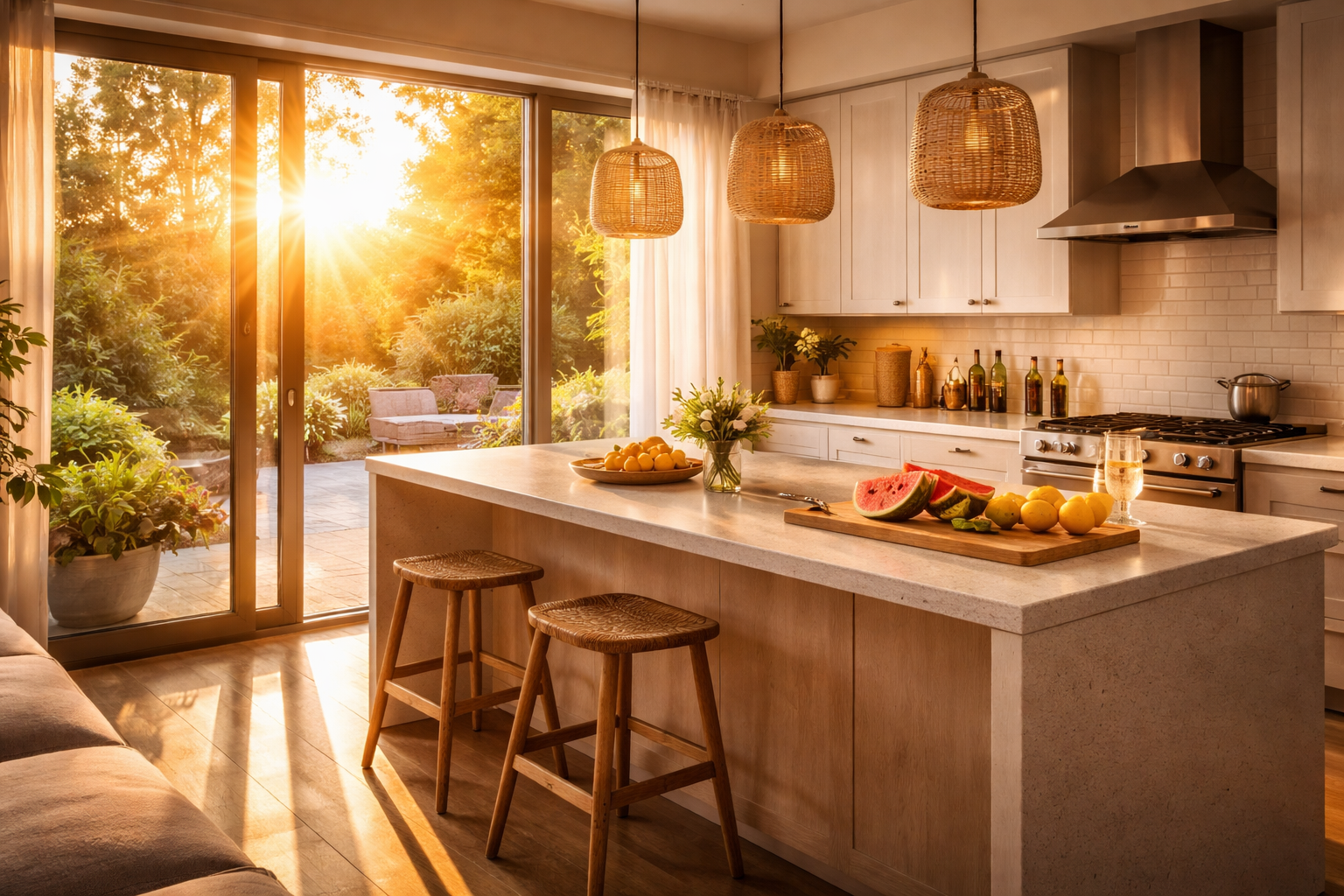
Intense evening sunlight fills a south-facing kitchen, creating warmth and potential glare in the summer months.
Lighting simulation and thermal analysis are introduced at the start of the design process.
Concepts are developed and tested in parallel. Sean moves into digital modeling early to evaluate ideas against real-world constraints.
During pre-design, analysis focuses on:
Site orientation and sun exposure
Seasonal daylight changes
Climate behavior in the Pacific Northwest
Local jurisdiction requirements
Example: A kitchen located on the south side of a home will receive intense evening light in summer. That condition affects comfort.
To address this, the design team may:
Adjust building massing to reduce direct sunlight
Refine window placement
Select matte finishes to reduce glare
These decisions are coordinated across disciplines early.
The architectural response may involve adjusting massing or overhangs to control solar exposure. At the same time, interior design decisions, such as finish reflectivity, are evaluated to improve visual comfort.
Lighting simulations make these conditions visible. Clients can see how light moves through a space before anything is built.
How Lighting Simulation and Thermal Analysis Influence Design Decisions
These tools actively shape design decisions. Sean notes that even experienced designers rely on testing to refine ideas. Unexpected results often lead to better solutions.
Common adjustments include:
Window placement and sizing
Modified to control daylight and manage heat gain.Layout refinement
Spaces shift based on light distribution and thermal zones.Material selection
Finishes and assemblies are chosen for performance.
In kitchen lighting studies for a recent project, simulations revealed areas of excessive glare during peak daylight hours.
The solution extended beyond window adjustments. Surface finishes, layout orientation, and window treatments were refined to reduce glare while maintaining natural light.
Sean also shared a facade study where exterior glass fins were used to balance daylight and heat control. The material allowed precise control over solar exposure while maintaining views.
How Lighting and Thermal Performance Work Together in Home Design
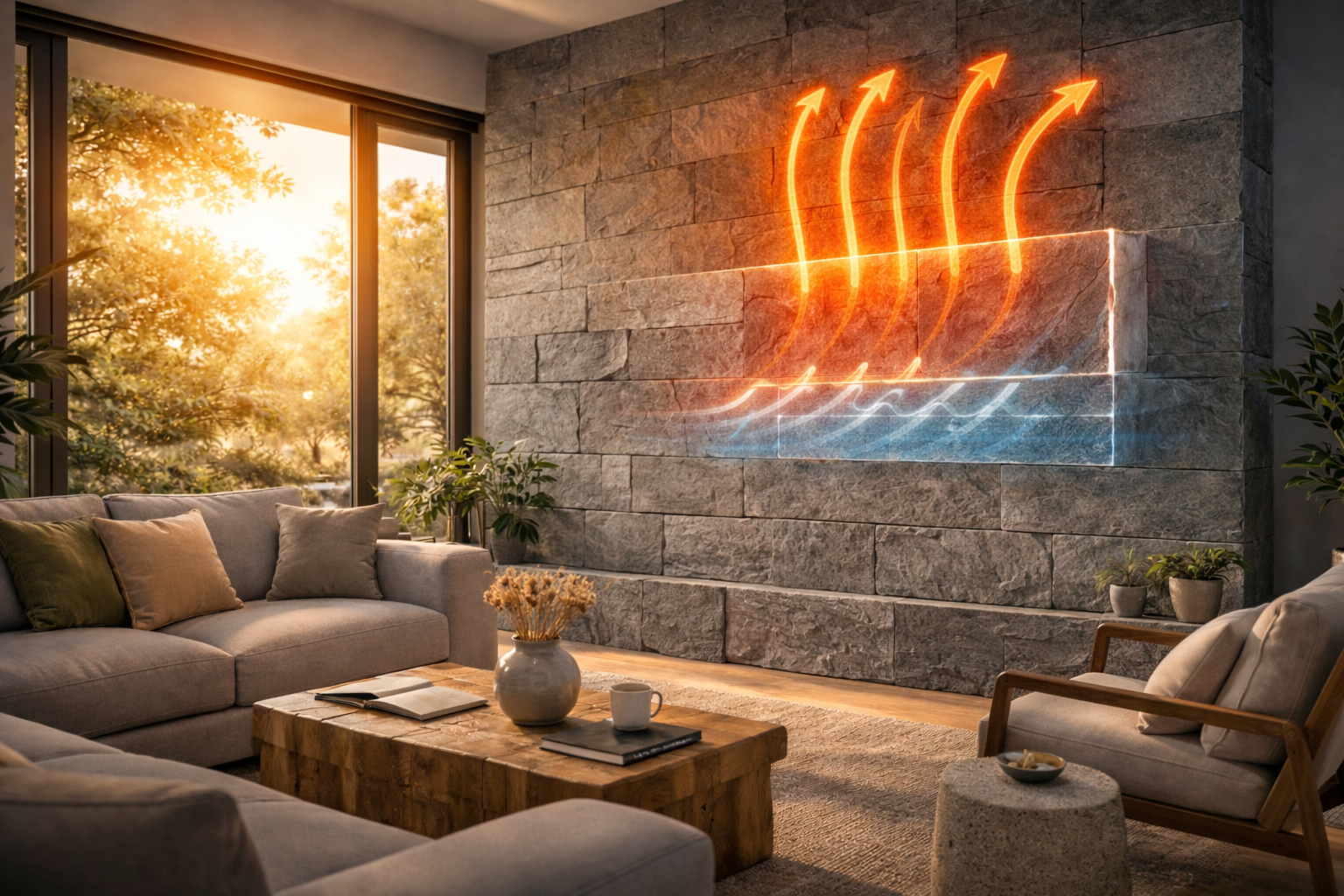
Stone surfaces absorb solar heat during peak daylight hours and release it gradually, helping stabilize indoor temperatures and improve comfort without relying solely on mechanical systems.
Lighting and thermal performance are directly connected. More daylight often increases heat gain. That relationship must be managed carefully, especially in the Pacific Northwest.
Key design considerations include:
Daylight and glare control
Window placement and matte surfaces reduce visual discomfort.Heat gain and heat storage
Materials such as stone can absorb heat during the day and release it as temperatures drop.Seasonal performance
Designs must respond to limited winter light and stronger summer exposure.
Material selection plays a direct role in performance.
In areas with strong solar exposure, materials like stone or dense surfaces can help stabilize indoor temperatures by storing heat and releasing it gradually.
These decisions are tied to seasonal behavior. A design that performs well in winter must also be evaluated for summer conditions to avoid overheating.
Why Designing for Comfort Matters in the Pacific Northwest
The Pacific Northwest presents specific design challenges.
Extended gray seasons reduce available daylight. Summer introduces longer days with more intense sun exposure. Moisture is a constant factor that affects durability and indoor air quality.
Designing for comfort in this region requires balancing light, heat, and moisture control across the entire year.
Lighting simulation and thermal analysis allow these conditions to be evaluated early, so the home performs consistently regardless of season.
Benefits of Performance-Based Home Design
Designing for comfort in homes produces measurable outcomes:
Stable indoor temperatures
Balanced natural light without glare
Reduced need for late-stage design changes
Lower energy use
Improved indoor air quality
Consistent performance across seasons
Most clients do not think about thermal comfort unless something goes wrong.
The goal is to design systems that perform consistently without drawing attention. When done correctly, comfort feels unnoticeable because there are no fluctuations, glare issues, or constant adjustments needed.
Risks of Skipping Lighting and Thermal Analysis
Skipping this level of analysis leads to predictable problems:
Cold or inconsistent interior spaces
Overheating during warmer months
Poor daylight distribution
Increased energy costs
Moisture issues, including mold and mildew
Spaces that look finished but feel uncomfortable
Building codes set minimum standards. They do not ensure strong performance.
Without detailed analysis, a project may meet code requirements while still missing opportunities to improve comfort, efficiency, and long-term performance.
With analysis, design decisions are intentional, and outcomes are predictable.
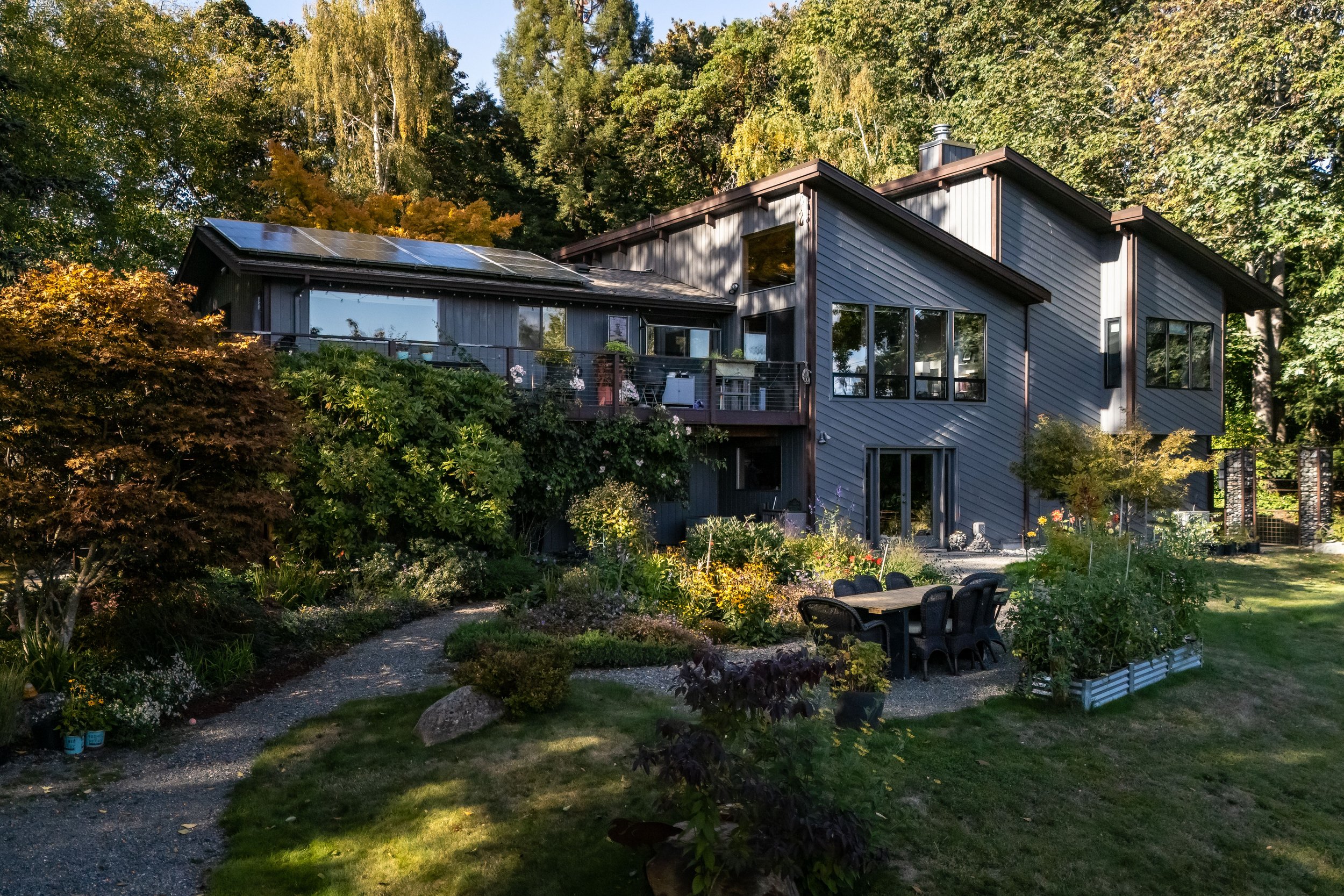

Waldron Designs, LLC is passionate about designing spaces rooted in their context and responsive to the natural environment. Are you ready to create sustainable permanence with your home?
GET IN TOUCH!