
Material warmth in interior design uses natural materials, light, and biophilic principles to improve comfort, wellness, and long-term performance. In the Pacific Northwest, where darker seasons and damp conditions shape how homes are experienced, material choices play a critical role in supporting both physical comfort and mental health. For homeowners seeking cohesion and a design direction they can trust, material warmth provides a clear framework that carries from concept through construction.
In Pacific Northwest interior design, this approach is especially important. Homes must perform through long winters, limited daylight, and seasonal shifts without feeling heavy or closed in. Material warmth helps spaces feel grounded, calm, and livable year-round.
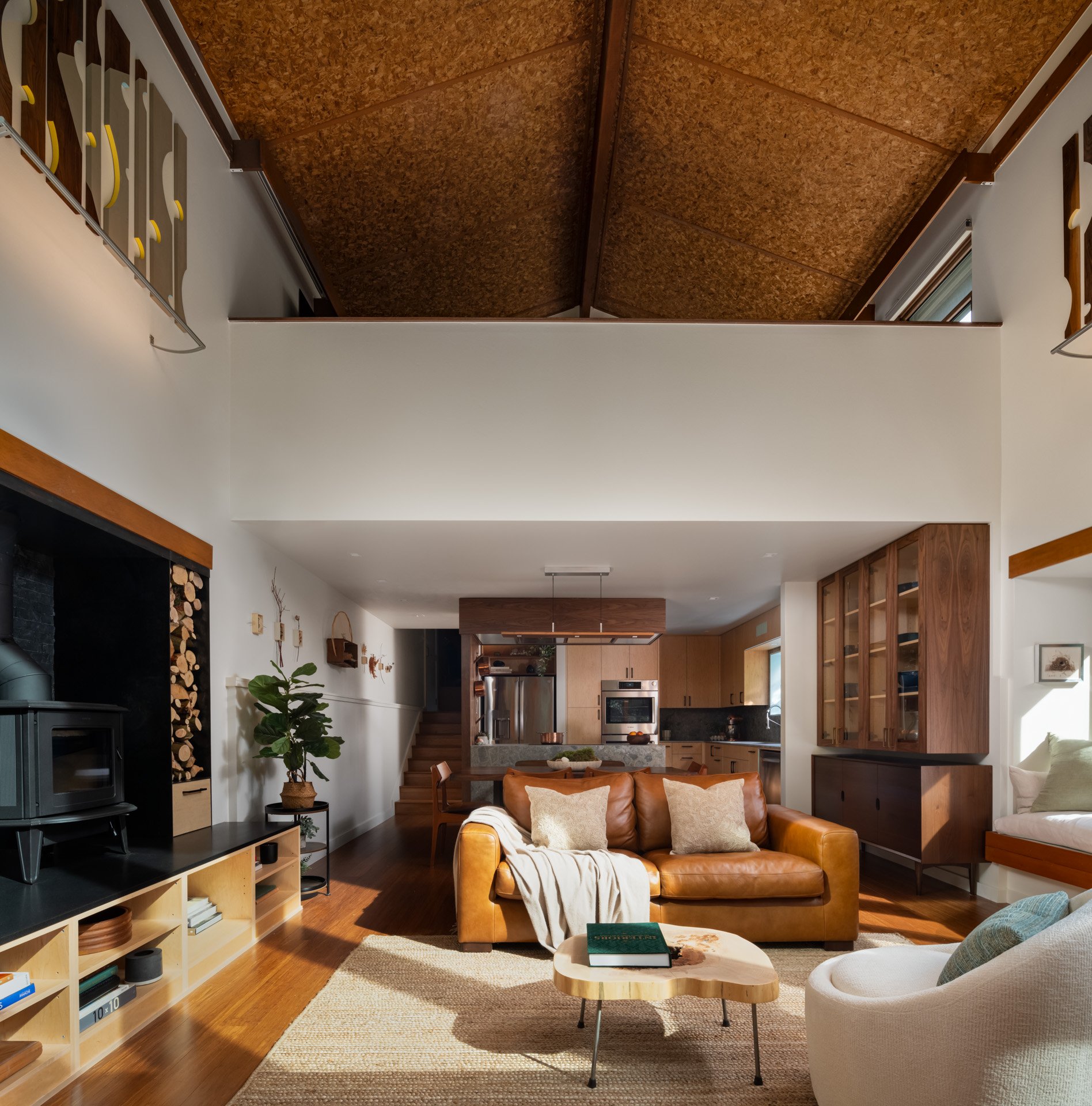
Natural wood, leather, daylight, and views of the surrounding landscape create immediate material warmth and seasonal comfort.
Why Material Warmth Matters in Interior Design
Material warmth refers to the tactile and psychological comfort created by natural materials and thoughtful detailing. Wood, stone, cork, wool, and linen do more than elevate aesthetics. They interact with light, sound, and touch in ways that reduce stress and support a sense of calm.
In regions where seasonal affective disorder is common, environmental design can either exacerbate or ease symptoms. Natural light helps regulate circadian rhythms. Views of nature reduce anxiety. Natural textures soften interiors and avoid the sensory dissonance often introduced by plastic-heavy or highly synthetic finishes.
For clients who value cohesion across architecture and interiors, material warmth eliminates piecemeal decision-making. The material palette is intentional. The elements work together. The result is a unified home that feels considered, elevated, and resilient.
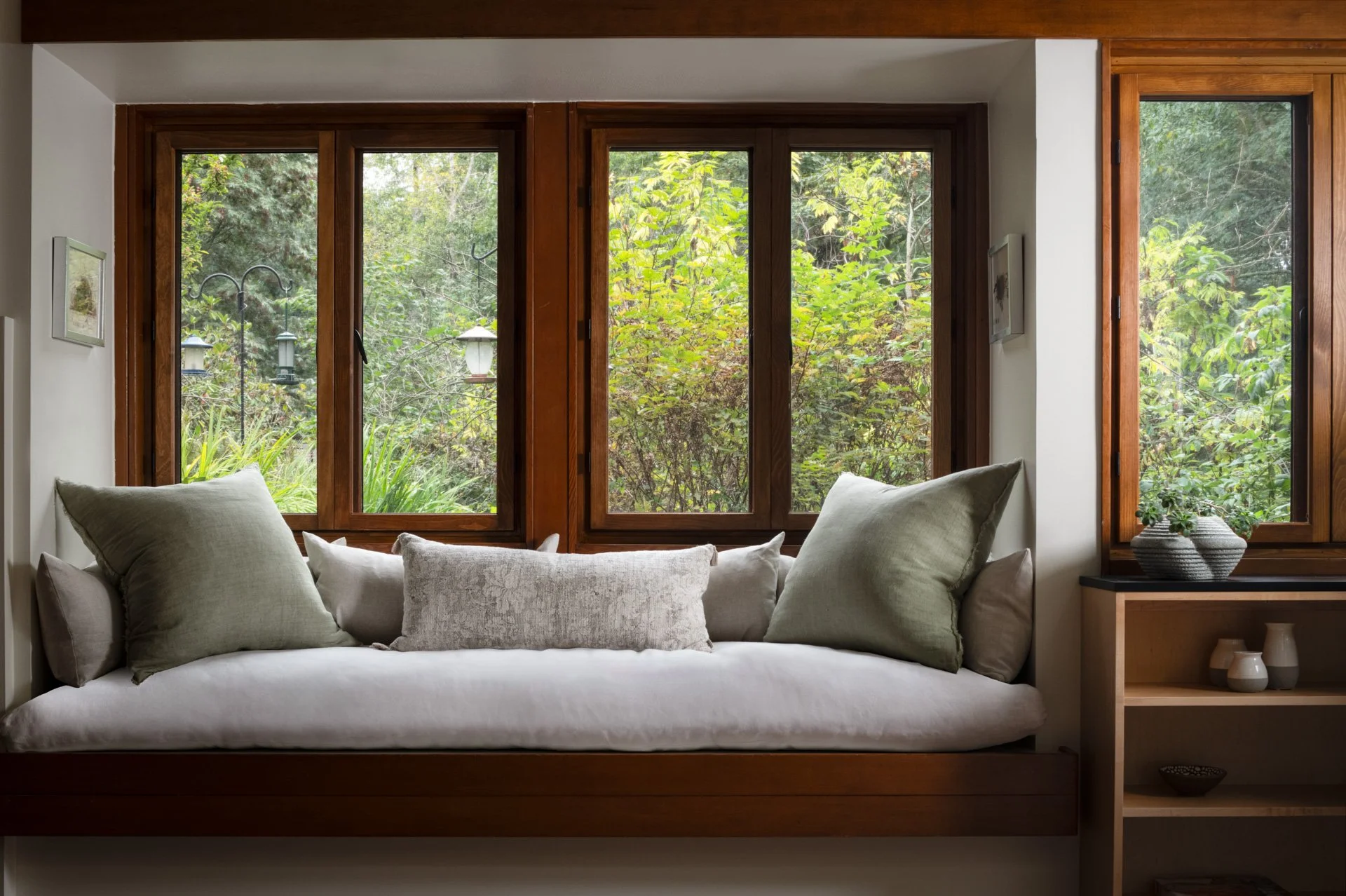
A window seat framed in wood offers softness, daylight, and a direct connection to the surrounding landscape.
Comfort and Performance Through Natural Materials
Comfort is both physical and psychological. While insulation values and mechanical systems matter, sensory experience plays an equally important role in how a home performs day to day.
Natural materials absorb sound, regulate temperature, and age with character. Wood and cork provide insulation benefits. Wool and linen help manage humidity and seasonal shifts. Stone adds thermal mass, stabilizing indoor temperatures throughout the day.
By contrast, overly synthetic materials often feel visually disconnected and harsh over time. Prioritizing natural materials supports long-term comfort while reducing maintenance and replacement cycles, a key consideration in PNW residential design.
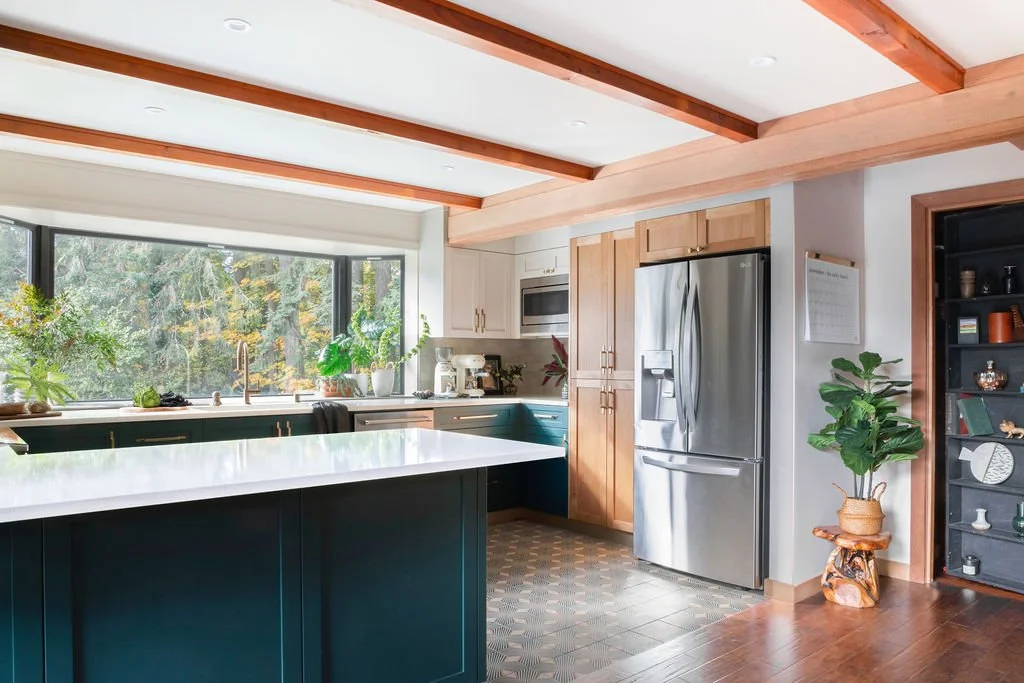
Exposed wood structure and natural finishes contribute to thermal stability and long-term performance.
Biophilic Design for Mental Health and Seasonal Comfort
Biophilic interior design goes far beyond adding plants. It is a holistic approach that connects occupants to nature through light, materials, views, and sensory experience.
Natural light plays a central role by supporting circadian rhythms and improving mood and energy levels. Indoor plants improve air quality and provide visual cues of growth, especially valuable during winter months when the landscape outside feels dormant. Caring for plants also introduces gentle daily structure, reinforcing stability and well-being.
Water elements, whether visual or auditory, promote calm and remind occupants of natural renewal cycles. Even subtle features can significantly improve how a space feels and functions.
Together, these strategies support mental health year-round and align with broader wellness-focused design principles.
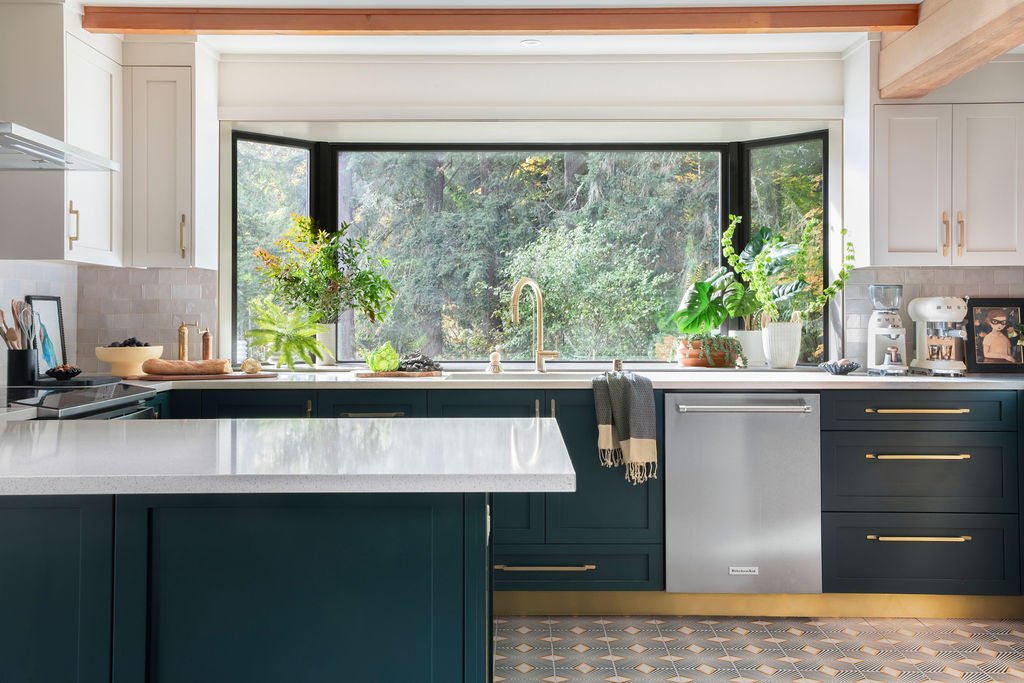
Large windows, indoor plants, and daylight support daily rhythms and biophilic connection.
Sustainable Interior Materials That Support Long-Term Living
Material warmth and sustainability are closely linked. Durable, natural materials reduce reliance on short-lived synthetic products and contribute to healthier indoor environments.
Wood, stone, cork, wool, and linen are renewable, long-lasting, and often locally sourced. These materials age gracefully, support indoor air quality, and align with sustainable construction practices without sacrificing performance or comfort.
Sustainability here is practical, not performative. It is about designing homes that feel good to live in and continue to perform well over time, an essential consideration for homes in the Pacific Northwest.
A Cohesive Design Direction You Can Trust
Decision fatigue is one of the most common challenges homeowners face during renovations and new builds. A clear material strategy provides confidence and continuity.
By prioritizing material warmth, natural light, and biophilic design principles, architecture and interiors remain aligned from early concept through construction. This cohesive approach supports comfort, performance, and longevity without unnecessary complexity.
For homes in the Pacific Northwest, material warmth offers a reliable design strategy that supports wellness and livability through every season. If a home works in December, it works year-round.
Frequently Asked Questions About Material Warmth and Biophilic Design
What is material warmth in interior design?
Material warmth in interior design refers to the use of natural materials such as wood, stone, cork, wool, and linen to create spaces that feel comfortable, grounded, and cohesive. These materials support both physical comfort and psychological well-being by softening light, sound, and texture.
How does material warmth support mental health?
Natural materials and biophilic design elements help reduce stress, regulate circadian rhythms, and improve mood. In regions with long, dark winters, these strategies can ease symptoms associated with seasonal affective disorder by creating calming, supportive indoor environments.
Why is material warmth important in the Pacific Northwest?
In the Pacific Northwest, homes experience extended periods of low daylight, damp conditions, and cooler temperatures. Material warmth helps balance these environmental factors by improving thermal comfort, reducing sensory fatigue, and creating interiors that feel inviting year-round.
What materials create the most warmth in a home?
Wood, stone, cork, wool, and linen are among the most effective materials for creating warmth. These materials offer natural insulation, acoustic benefits, and a soft, aging-resistant visual.
How is biophilic design different from adding plants?
Biophilic design is a holistic approach that connects occupants to nature through light, materials, views, textures, and sensory experience. Plants are one element, but true biophilic design also includes daylighting strategies, natural finishes, and environmental rhythm.
Is material warmth compatible with sustainable design?
Yes. Natural, durable materials often have lower environmental impact, longer lifespans, and healthier indoor air quality than synthetic alternatives. Material warmth supports sustainability by promoting longevity and reducing material turnover.
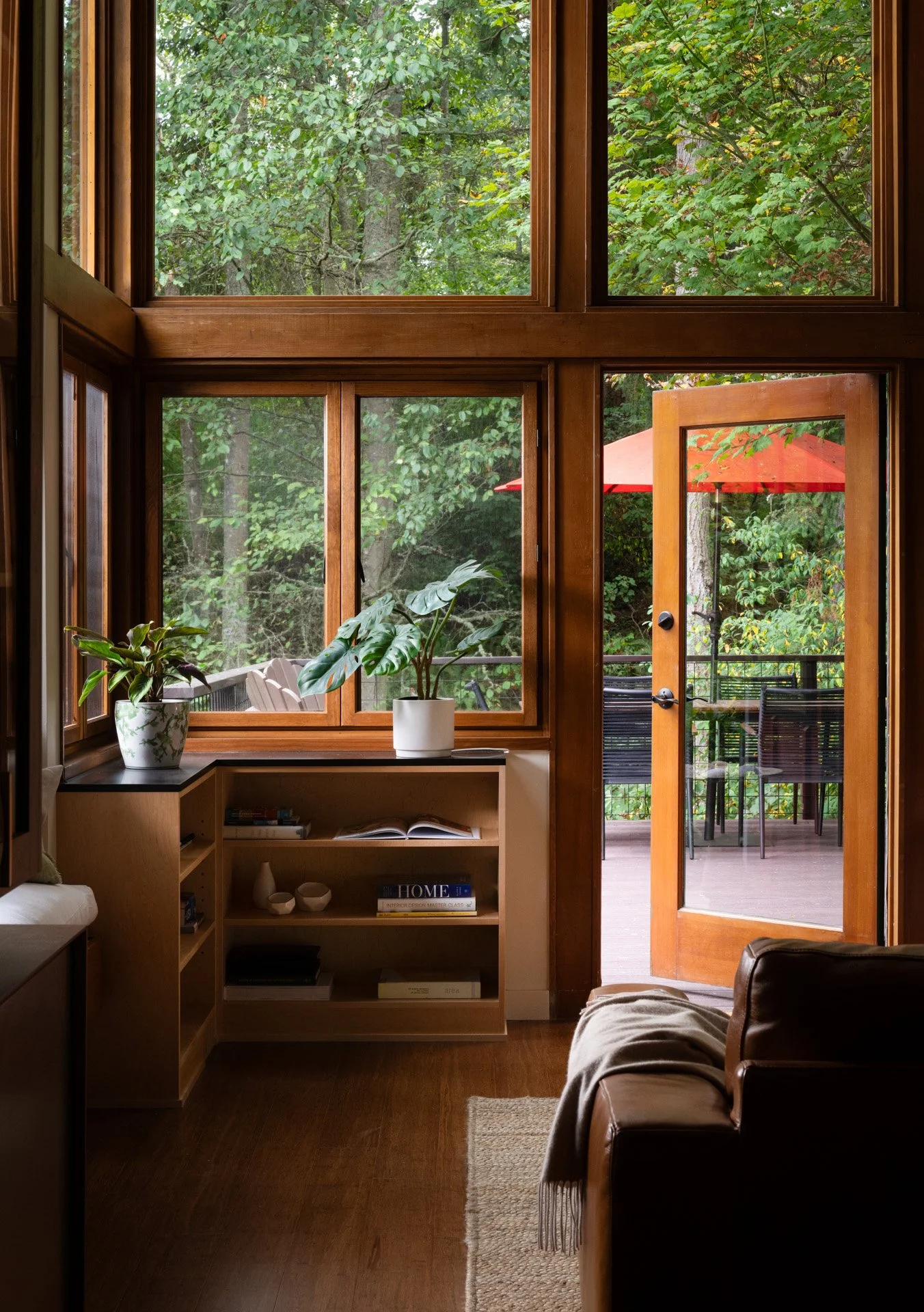
Architecture and interiors align through consistent material choices and natural light strategies.

Waldron Designs, LLC is passionate about designing spaces rooted in their context and responsive to the natural environment. Are you ready to create sustainable permanence with your home?
GET IN TOUCH!