
LEED AP/LFA Perspective: Energy Efficiency for Winter Comfort
The Pacific Northwest winter doesn't have extreme temperatures—it has persistence. Gray skies, dampness, and that particular kind of chill that seems to settle into spaces without proper design. That's where energy efficiency becomes more than a sustainability trend; it becomes the foundation for genuine comfort.
Energy Efficiency in the Pacific Northwest
The PNW is more complex than most people realize. We're not a monolithic region—we span from the Olympic rainforests on Washington's peninsula to the rolling loess of the Columbia plateau. That means our design language needs to shift to harmonize with our specific sub-region.
We're passionate about energy efficiency because it's the right thing to do environmentally and because it often saves our clients money in the long term. But here's what sets our approach apart: we marry those strategies to an experiential quality as we design.
That means three core strategies working in concert:
Daylighting
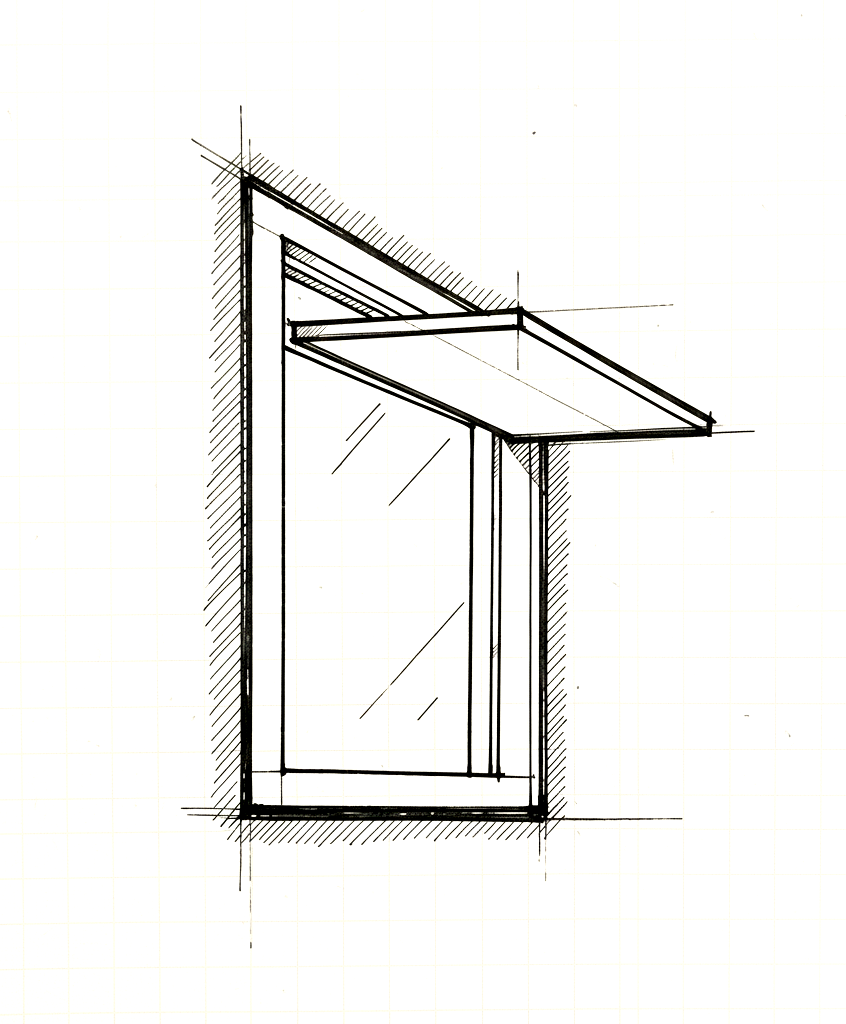
Sketch of a light shelf
We look for methods to drive daylight as deep into our spaces as possible. That means leveraging top-lighting through clerestories and skylights, raising window head heights, and even using light shelves—architectural elements that "bounce" daylight onto ceilings. Winter daylight is precious in the PNW, so we capture every bit of it.
Heating and Cooling
Heat pumps are far-and-away the most popular systems for conditioning interior space because they're easily adaptable and energy-efficient. But we've been leveraging them more strategically—powering hydronic radiant floor systems. This is where it gets interesting: we're not just using mechanical equipment to provide comfort, we're creating an experience. A radiant floor feels fundamentally different than forced air. And when combined with thoughtful window placement, the system operates as a "heat battery"—soaking up winter sunlight in tandem with the heat pump to add passivity to the system and make it even more efficient.
Tight Building Envelope
While this may be the least visible strategy we employ, it's often the prerequisite for all others. A tight building envelope means designing all elements of the home's exterior to resist the movement of heat or vapor from one side to the other. By being careful in selecting windows and doors, we maintain a comfortable interior environment without compromising on the visible elements that let our clients truly enjoy their spaces.
LEED Certification, Living Future Accreditation and Comfort: Finding Balance
Not all LEED credits are focused on occupants. LEED maintains a holistic view of projects, offering credits related to comfort and to responsible site use or product sourcing. Some credits that aren't directly related to occupant comfort might feel like compromises, but here's the beauty of the LEED system: clients don't have to chase every credit. They have the opportunity to prioritize different aspects of the design to achieve certification in a way that aligns with their values.
For homeowners intimidated by the complexity of LEED, it helps to know what the certification actually represents. LEED (along with programs such as the Living Building Challenge and Passivhaus) offers a clear process to ensure designs maximize occupant health while minimizing environmental impact.
Our goals as a client and design team are often already aligned with these processes. Because of that, it can be valuable to review LEED credits against your design even if you're not pursuing formal certification. You get the rigor without the pressure.
Windows and Thermal Envelope: Where Performance Meets Experience
When it comes to choosing windows, sizing and placement matter enormously. We want to ensure we're getting the most out of our glazing (that's architectspeak for windows). Beyond that, we focus on performance features like U-values (insulation) and solar heat gain numbers.
But what separates a good window from a great one? LEED doesn't directly dictate window performance, but it definitely influences those elements. Depending on which credits you're pursuing, LEED may require windows to be third-party certified (think EnergyStar programs). And since glazing impacts daylighting and views, their sizing and placement influence those credits as well.
Generally, we want low numbers for:
U-values (lower = better insulation)
Solar heat gain coefficient (SHGC) (lower = less heat transmission)
Air leakage (lower = tighter seal)
Here's where it gets nuanced: the methods manufacturers use to achieve good performance—especially SHGC—can impact experiential qualities like "visual transmission" (how clearly you see through the glass). We work to balance these characteristics, which can occasionally be in tension with each other. A window that blocks all heat might also reduce the clarity of your view. Our job is to find that sweet spot.
Beyond windows, we design for year-round thermal comfort, so ensuring our designs adapt for every season is critical. A well-designed wall and roof assembly keeps heat out in summer and inside in winter. But we also leverage the geometry of those elements to respond to the seasons.
Something as simple as a roof overhang can be designed to provide natural shade in summer while inviting low winter sun into your home as it stays low in the sky. That's passive design working with the seasons, not against them.
Working With the Climate, Not Against It
Energy efficiency in the PNW isn't about fighting the climate—it's about working with it. By combining daylighting, strategic heating systems, tight envelopes, and thoughtful geometry, we create homes that are genuinely comfortable, visibly beautiful, and aligned with both LEED and Living Future principles and the natural rhythms of our region.
In Part 2, we'll dive deeper into heating systems, design strategy, and the practical priorities for homeowners ready to upgrade their winter comfort.
Ready to explore energy-efficient design for your home? Contact Waldron Designs to discuss how sustainable design can transform your winter comfort.
Waldron Designs, LLC is passionate about designing spaces rooted in their context and responsive to the natural environment. Are you ready to create sustainable permanence with your home?
GET IN TOUCH!